
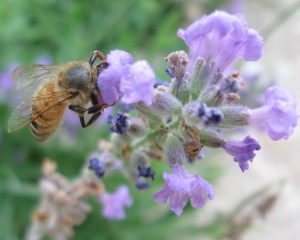
Whether you are an urban farmscaper, a gardener, a small farmer, or maybe a garden gazer, you will have had encounters with many insects, including bees. I came to know the bees by way of playing in the plants. While busy harvesting, I would ever so gently swish them aside to retrieve my prize without worries of being stung. They were more interested in the flowers anyway and I needed the bees there to get their pollination work done to improve the fruit set on my plants.
Lots of Bees in the Garden = More Food on my Plate
If you haven’t already heard about the decline in our pollinator population then you must be from another planet. That is not what I am writing about, but I need to give a little background. This is a worldwide problem and includes honey bees as well as native pollinators such as bumble bees, mason bees, wasps, flies, butterflies and beetles. There are many more pollinator and beneficial insects than harmful insects. Home gardeners have been conditioned over many years that bugs are bad and that our gardens should be insect free. Chemicals have been created to kill harmful insects, but these chemicals are causing problems for all insects, mainly neonicotinoids.
Gardeners have also been encouraged to plant plants which attract beneficial insects to the garden, but then when purchased from some garden centers, the plants have been found to have been treated with neonicotinoids by the growers. This could be something as simple as a treated seed up to a spray or drench used as a foliar spray. For a downloadable report visit the Xerces Society, http://www.xerces.org/neonicotinoids-and-bees/ I want to attract bees to my garden, but not to poison them. I would recommend starting your own plants from seeds. Don’t know how to start seeds? Learn how from many of the other posts on this blog. Recent research has also discovered that there is a plant virus that is linked to increased bee deaths http://nyti.ms/1aHQqIj

Last year I was a bee apprentice where I learned about beekeeping with other women. The year was spent learning about the honey bee, Apis mellifera, a social bee, which we are most familiar with because they produce yummy honey. If you haven’t heard by now, one in every three mouthfuls of food is contributed to the pollination efforts primarily of the honey bee. If bees are gone, so are almonds, apples, blueberries, asparagus, cherries, avocados and broccoli just to name a few. Oh, and honey. How could I forget that? I encountered and dealt with mites, a different problem affecting these bees, using chemical free methods. The more I learned the more I thought I should become a bee keeper. This is what I thought I should do because I needed to have more bees in my garden to make sure the flowers were pollinated.
Fewer Bees in the Garden = Less Food on my Plate
Pollinator insects are in trouble. What can I do to help? This question kept me up some nights. How many bee hives should I have? What else do I need to learn about bees to help them? Should I become an entomologist and research bees? Then it dawned on me. I was already doing what should be done. I am an urban farmscaper, and I grow plants. I have been planting plants to attract pollinators, providing them with nectar and pollen; in return, they pollinate my plants. But the most important thing I do is that I grow my plants in a sustainable, earth friendly way, providing the pollinators that visit my garden with “clean chemical free” plants. This is something that is simple and that anyone can do. If everyone would think, Beescaping; providing pollinators with chemical free plants to forage upon, then as urban farmscapers, we can start to make a difference. There are many plants that are loved by bees and other pollinating insects. If you have ever been running through a chemical free lawn that included clover and stepped on a bee, you will recall that plant first. When selecting seeds, think about plants that flower during every season so there is plenty of nectar throughout the year.
My Favorite Plants for Beescaping
- Mints, any and all, this is a bee’s favorite plant to forage upon. This includes all plants in this family, basil, peppermint, agastache, oregano, lavender, sages etc.
- Borage. Not only will bees visit, but you can harvest the flowers and use in your salad. Visually stunning and adds a slight cucumber flavor.
- Thyme. Thymol is a natural insecticide used to treat honey bees encountering mite problems, so why not add it to your garden and let the bees bring it to the hive naturally.
- Cosmos, a wonderful annual ranging in colors from white, to light pink, to a deep pink. It also makes a great cut flower. Select an heirloom variety to collect seeds after the seed heads dry on the plant.
- Culvers Root, Veronicastrum virginicum is a plant native to Michigan and found throughout the Eastern United States. I have never seen so many bees on these spikes of white flowers. The buzzing was so loud, I could hear them from a distance more than 20 feet away. It’s somewhat attractive in the garden as a filler type plant, growing about 4 feet tall. Long early, midsummer bloomer.
- Cup Plant, Silphium perfolatum is another plant native to Michigan and found throughout the Eastern United States. This plant is huge, over 6 feet, so make sure you give it room in the back of your garden border maybe? The yellow flowers are always covered with bees. Water is collected where the leaves meet the stem creating small “cups”. Prolific seed producer, just warning you. Plants to share with friends the following year.
- Mexican Sunflower, Tithonia spp. was host to bees and monarch butterflies this past summer. In fact, now that I think of it, this is the only plant I saw the monarchs on. They are also in decline, so planting this large (another 6 footer when conditions are right) bright orange annual will bring color and food all summer to late fall.

Early spring Crocus


 “Chick-a-dee dee dee. Chick-a-dee dee dee.” This is the sound I hear on the day I can sleep in. Outside my window, a repeating call. The mornings are lighter, and the noises are different…..My mind wanders as I fall in and out of consciousness…are these the sounds of migrating birds? Or maybe a mating call of a familiar bird that has changed its tune for the season….. I’m not a morning person, and it was nice to wake up early enough to listen to nature. “Whooo, who-who. Whoooo, who-who.” A dove sings it’s softly spoken song. Daylight savings time has started. I don’t understand why we do this. Someone please help me. I don’t know what the real time is. Just when I have no problem waking up in the morning, we have to move our clocks forward an hour. Now I will struggle again to wake up and rush to work on time. Why can’t we live by the sun? Like the plants and animals. They seem to do just fine without looking at the clock. What tells them to start growing or traveling to and fro? So my friend tells me “the good news is that our evenings will be lighter later.” It still doesn’t help with the struggles of waking up an hour earlier. Can I just lie in bed a little longer? The ground is frozen anyway. I attempt to pull the blanket up around my neck to get a few more minutes in, but the dog has positioned herself like a rock on the blanket at my feet preventing me from doing so……….Longer days ahead mean more time to work in the garden after I get home from my day job. I have attended enough garden education, garden shows, done enough garden reading and planning, it’s time to get outside and get my hands dirty. Oh geez, there’s still a foot of snow in some places, and if I see any soil, it is frozen solid. I would need a pick to break it apart. I need to make sure my low tunnels are ready so I can sow spinach and arugula seeds, and transplant the onions I sowed a few weeks ago…….I didn’t plant anything in the fall, maybe this year I will……. Once the snow melts and I can work the soil, in go the peas. I think that I will give the peas a little jump by planting them in a low tunnel to get them started…… Hmmm. Is my garden plan done? Maybe I should get out of bed and make sure. I need to look at my seed sowing calendar. When am I starting peppers? Is it this week? I think there is one more garden show coming up………..I think it’s raining. Almost spring, try to stay calm.


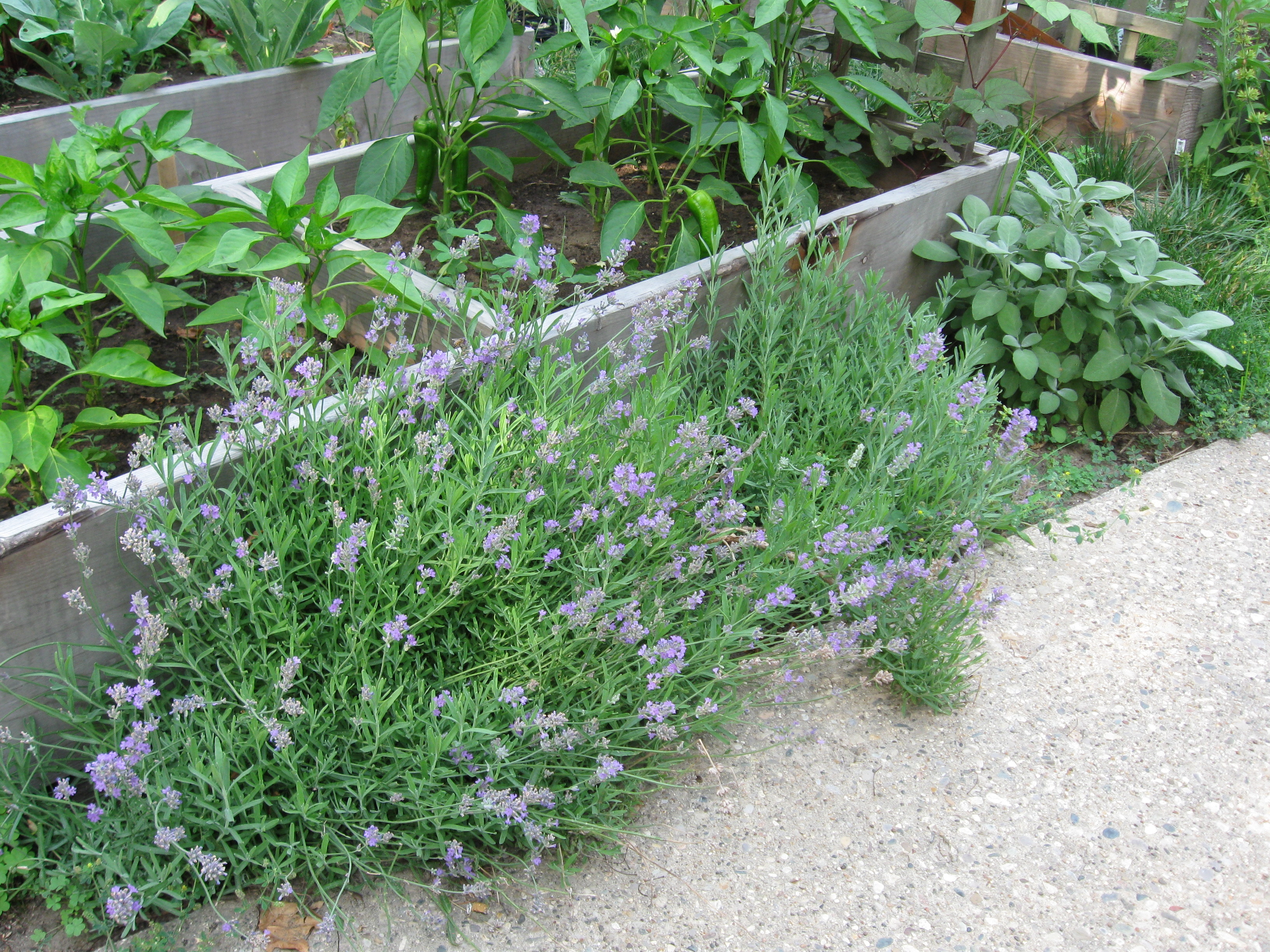



 My Urban Farmscape