Archive | January, 2012

Where Does Your Garden Grow?

29 Jan

Whether you are a first time gardener or a master, a lot of planning is necessary to ensure a successful garden. So…First things first. Where is your garden going to be? A great goal would be that your whole yard becomes your Urban Farmscape, but that could be a huge task, so it’s best to start small. A side yard, your front yard, the space outside your kitchen door, or maybe  your front porch or back deck. Wherever it is there are a few things you need to do before you select plants. You will have to go outside for this so bundle up! I love to go out when the sun is shining brightly on the snow, which isn’t very often in Michigan but when it does, it’s amazing. Especially after a fresh snow when the lawns are covered with sparkling diamonds and bushes look like sugar frosted cupcakes. Nice! Okay… back to planning. Once you decide where your garden will be, do the following:
1. Measure the area and make rough sketches.
2. If you have a camera, take a lot of pictures.
3. Think about how you will be planting your plants, directly into the soil, containers, or maybe you would like to build a raised planter.
4. Sketch your garden space onto a piece of paper or graph paper. Be sure to include the location of your house, shed, fences, water spigots, and existing plants or trees. When you think you have all the information you need, you can draw a more detailed drawing (inside the house). Use a thicker point marker to outline buildings, and a thinner tipped one for everything else. Color if you like. Name buildings (house, shed etc.). Add proposed garden beds using pencil again, or a fine tip marker. If you are planning a container garden on your deck, then draw to scale your deck and where the containers will be placed. Be sure to include furniture or grills. Make notes of the actual growing space you have in square feet. For example, a 12 inch container would be 1 square foot. A garden that is 2’ x 8’ is 16 square feet. This is helpful for future reference when deciding what to plant, adding soil amendments or fertilizers. Don’t worry; I’ll talk about these soon.
5. Locate and draw a symbol for North in a lower corner. A capital “N” with an arrow pointing toward the north is typically how this is done.
6. In the opposite lower corner, write down the scale you are using. For example, if one square = 1 foot, then write that.
7. Give your garden a name and write that at the top of your page.
8. Now, observe the sun for a few days in your proposed garden space. For most fruits and vegetables, a minimum of 6-8 hours is needed but full sun is preferred. Herbs thrive in hot sunny places. Keep in mind the sun is lower in the sky during winter and that a southern exposure today may be shaded by neighboring buildings or trees, but as the sun moves higher into the sky, the area may become blasted with sunshine before too long.
These are the first steps in your design. What to plant where is soon to come. Stay tuned as I evaluate and share my thoughts on some computer related garden planning tools that are fun and will help you create your Farmscape!

Winter Carrots

22 Jan


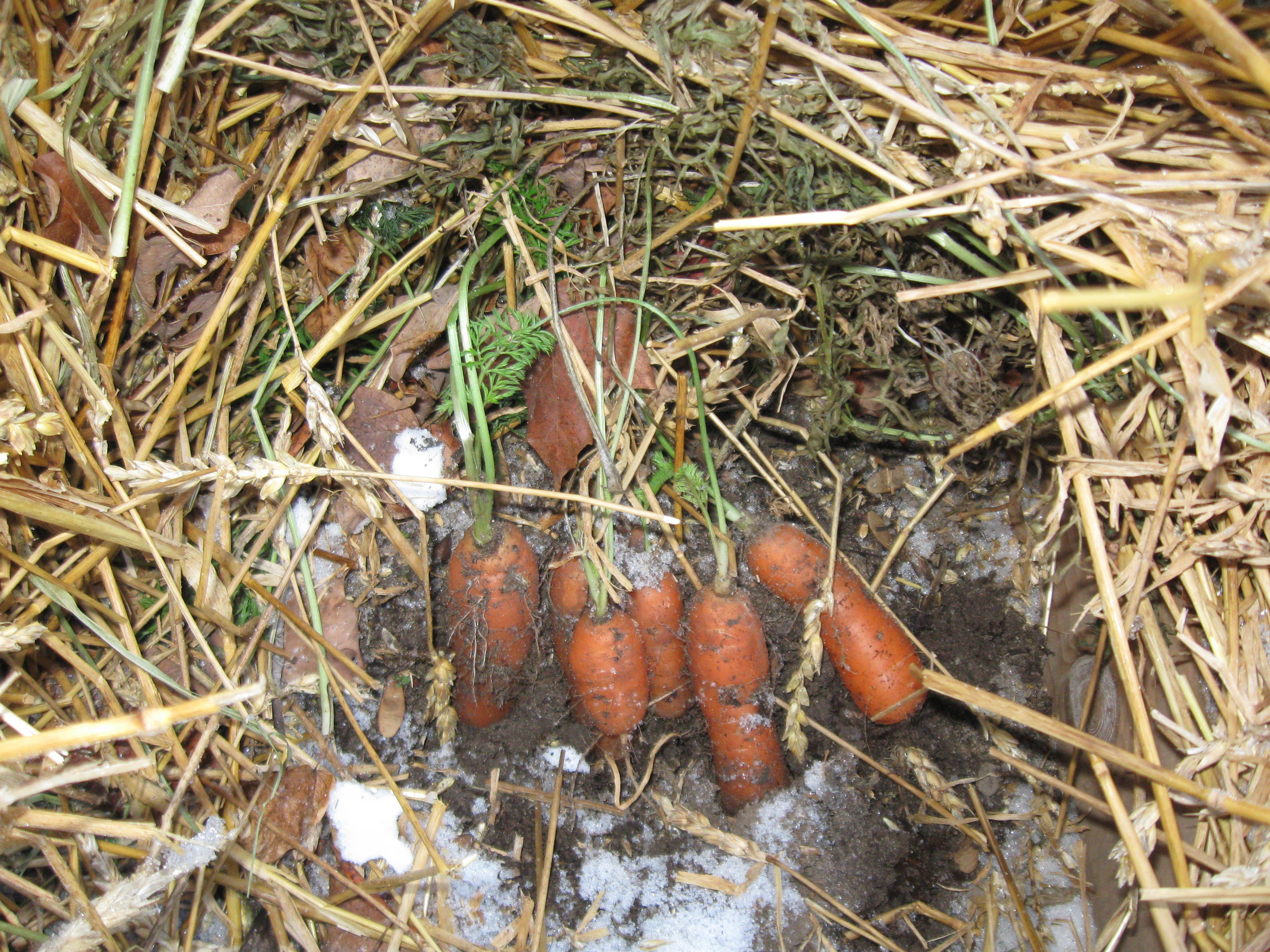
Bright orange rays infused through flesh,


sleep beneath


straw


ice


snow


mesh.


Mercury drops while sugars rise,

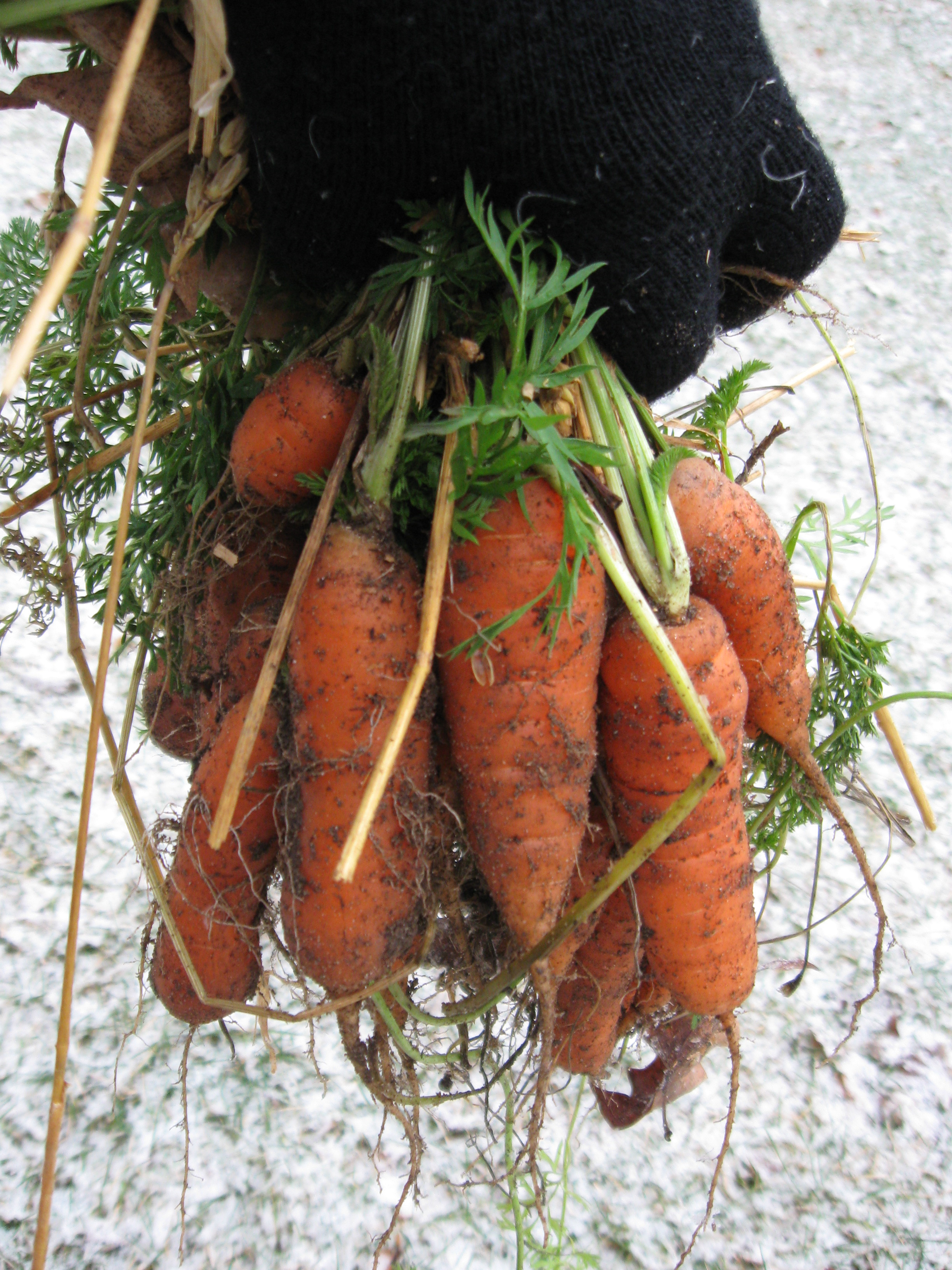
January harvest

brings

sweet

surprise.


Metal tines release root from soil,

Emanates

like the

golden

royal.


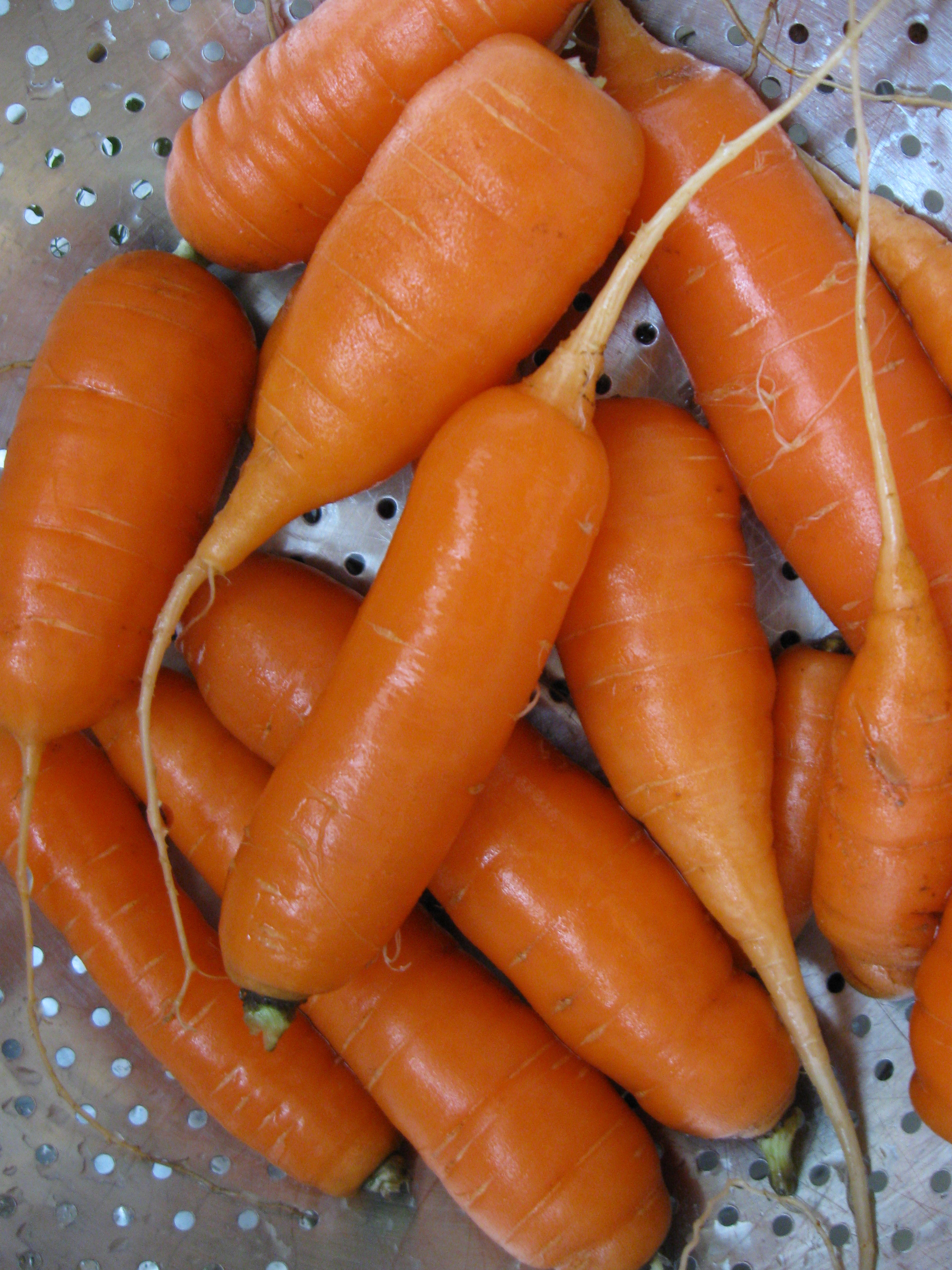
Cool crisp bite no need to say,

taste of

sunshine,

long

hot

days.


Seed Sowing Calendar

15 Jan

“A garden is half-made when it is well planned.  The best gardener

is the one who does the most gardening by the winter fire.” 

~Liberty Hyde Bailey


Seed packets and seed starting supplies are beginning to pile up around my house.  Soon there will be hundreds of little plants in sunny window sills and sprouting under grow lights.  I’m already anxious for spring, but know that I need to wait until the right time to get started.  After doing an inventory of seeds, and ordering what I want for this year, it’s time to plan my seed sowing calendar. 

When preparing to sow seeds, you need to start at the end by thinking of when it’s safe to plant them outside.  Our frost free date here in Mid-Michigan is about May 13th.  This is a good time to plant most vegetables and flowers outside without worrying about the dangers of frost.  Eggplant, peppers and basil don’t do well in cool soils or air temperatures.  I have had better luck waiting until Memorial Day weekend to plant those outside.  Or, you could use season extension techniques which I will talk about closer to planting time.  What about cooler season crops?  Spinach, arugula, lettuce, beets, peas, carrots, broccoli, cauliflower, onions, chives, cilantro and violas are just a few that can be planted outside in April, about the first or second week. So, should you start sowing all the seeds you have right now?  How to you figure out what to sow when?

            First things first.  Get a calendar.  A really big one that you can write all over and see every day.  Or, if you prefer, a planner type calendar, or a spread sheet.  Whatever works best for you.  Mark your first frost free date.  That is going to be your starting point.  You can also add something like, “Plant Cool Season Crops” on a day in the first two weeks of April, and then around Memorial Day, “Plant Warm Season Crops” so you know when to plant out eggplant, peppers and basil.  I am going to use tomatoes as an example to get you started.  When you look at the cultural information for tomatoes, typically it will say start indoors 6-8 weeks before last frost.  Starting on the calendar at May 13, you will count backwards 6-8 weeks.  So any time between March 18th and April 1st would be an ideal time to start your tomato seeds indoors.  Continue to do this with everything you are going to grow.  Some seeds, such as beans or nasturtium do best planted directly in the garden so don’t start them indoors.  Follow directions from your seed supplier, or better yet, get the book The Seed Starters Handbook  by Nancy Bubel.  She covers in detail everything you need to know about seeds.  A must have resource for every Urban Farmscaper.  As you continue to work on your seed sowing calendar, you will probably start to notice that, with a few exceptions, most seeds will need to be started in March.  Some cool season crops such as broccoli will be started at the end of February. Your calendar will also serve as your planting calendar and a record for future years, so take good notes.  You should start shopping around for seed starting supplies such as “No Damp Off” seed starting mix by Mosser Lee, Heat Mats, Seeding Trays (like the 20 row seeder available at Johnny’s Selected Seeds) and full spectrum fluorescent lights.  Soon I will be sharing with you my tips and tricks for success as I start sowing my seeds.

Is it the Seed or the Plant?

5 Jan

Think about it. You need seeds to grow plants, but then you need flowering plants to make fruit that holds the seeds. What came first? The seed or the plant?

And how do you grow seedless vegetables and fruit? Companies are actually creating plants that flower, and make seeds, but they aren’t viable. It’s a flowers job to reproduce and create lots of seed to ensure it continues to exist. Think dandelion. Does that make sense?

Long, long ago, in the Kingdom of Plantae, there first existed non-vascular (no xylem or phloem to transport water or food or roots) plants called Bryophytes (think mosses and liverworts). They reproduced with the help of water splashing male gametophytes to female gametophytes. Soon evolved Seedless Vascular Plants (plants with xylem and phloem) that reproduced by the production of thousands of spores that drop to the ground at the right time ( brown spots under leaves of ferns). Lastley, plants evolved into Seeded Vascular Plants producing seeds in cones (pine trees) and seeds in fruits of flowering woody and herbaceous plants (trees, shrubs, fruits, vegetables, flowers). Oversimplified, yes, but does it answer the question? Maybe.

Moss sp. showing reproductive organs.

Moss sp. showing reproductive organs.

Photo courtesy of Derek Shiels

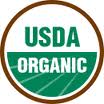
While you contemplate on this, you need to get a jump on getting your seed catalogs if you haven’t already. Whether you are going to start seeds or not (I will teach you how later, so you might as well order some) the catalogs offer a lot of great cultural information. You can order seed catalogs or download them from the company’s website. While thumbing your way through, pay attention to container or climing tall varieties. They take up less space which is something you need to think about when planning your Urban Farmscapes. Look for seeds and seed companies that are certified organic. Starting with organic seed is the best choice. They should carry the standard logo on their label such as I have here.
Also look for heirloom, open pollinated seed. This way you will be able to collect seed to use for next year (I will teach you how to do that later too). Heirlooms are old fashioned varieties that pollinate freely and have been collected and saved over time. These would be the plants our grandparents and great grandparents grew. If you see a hybrid, sometimes called an F1 Hybrid, this means it is a cross between two or more other varieties. In flowers for example, if you cross a white petunia with a purple petunia, you may get striped white and purple petunias or lavender colored petunias. Is this bad? Nope. People have been creating hybrids throughout history trying to improve something about them. Tomatoes have been bred to last longer on the grocery store shelves, thus sacrificing flavor. Who wants a tomato that doesn’t taste good, but can sit on a shelf for a long time? Can you get organic F1 hybrid seed? Yes. But you won’t want to collect hybrid seed because the seed you may get could be the original variety that was crossed to get the hybrid. Make sense? Again, I am oversimplifying while trying to explain the world of plant genetics and seeds. Send me a question or comment if you want to discuss further.

I have become obsessed with growing heirloom varieties and collecting seed, but still need (well, want, maybe not need) seed each year. Here are a few of my favorite seed companies.
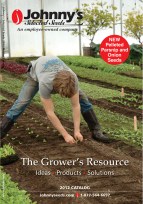
photo courtesy of Johnny's Selected Seeds

Johnny’s Selected Seeds offers a large selection of organic and heirloom vegetable, herb, and flower seeds as well as fruit plants. They also carry small farm and gardening supplies,along with tools designed by Eliot Coleman. Great quality and service in business since 1973. The employee owned company is located in Maine. The best resource I have found so far for cultural information. You will save this catalog and use as a reference! Awesome online resources. In my garden I will be growing many peppers that are recommended by Johnny’s for containers, along with many other yummy things. Johnny’s has been my favorite seed source for as long as I have been gardening.

www.johnnyseeds.com (877) 564-6697
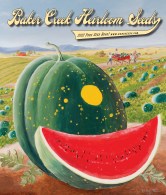
Photos courtesy of Baker Creek

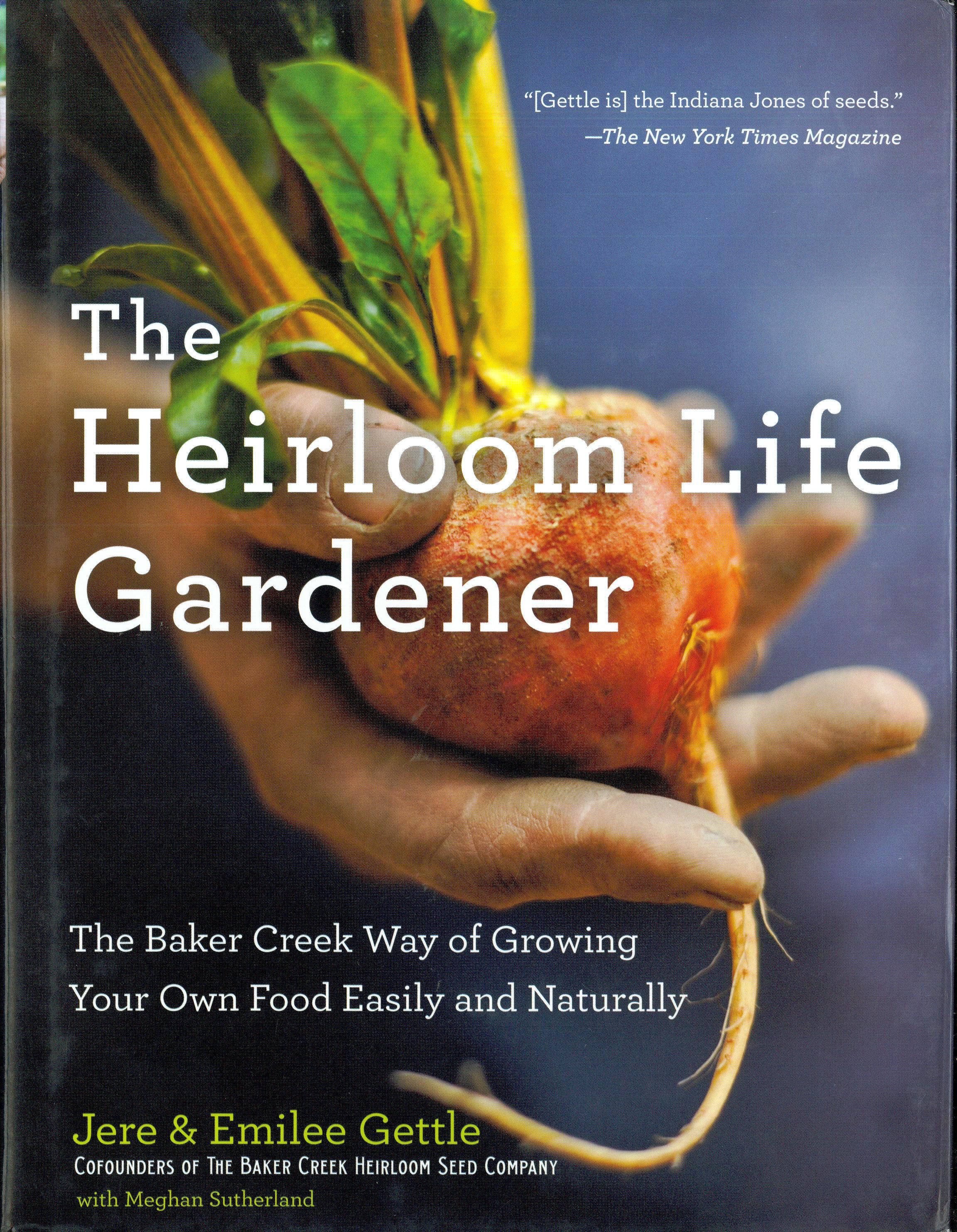
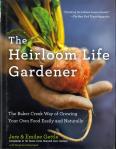
Baker Creek Heirloom Seed Co. The life forces behind this fourteen year old company are Jere and Emilee Gettle who produce only heirloom varieties. You should buy their book and to learn more about heirlooms and their whole story. The Heirloom Life Gardener by Jere & Emilee Gettle with Meghan Sutherland is available on their website and other book buying venues. Not only is it a story about Baker Creek and the importance of growing heirloom varieties, it has an A to Z Growing Guide for their favorite fifty crops that include the history and uses of the plant, growing tips, pests and diseases, seed saving and preparing it to eat. AWESOME! In my garden this year I am going to grow their Top 10 Favorite Container Plants that is discussed in their book in chapter 7 titled, “City Farmer”. Buy the book. You won’t be disappointed.
www.rareseeds.com (417) 924-8917

While I’m on the subject of heirloom and open pollinated seeds, check out Seed Savers Exchange. I would definitely have to agree with them as being the nation’s premier seed saving organization. Located in Decorah, Iowa since 1975, they are a seed saving non-profit member organization collecting and selling seed to help fund their preservation efforts. I have always wanted to visit their Heritage Farm headquarters or attend one of their special events. If you don’t want to start your own seed, then you could opt to buy transplants from them. They grow and sell several heirloom pepper transplants as well as heirloom tomato varieties like Cherokee Purple and Hungarian Heart. These won’t be at any garden center I know of. You don’t have to be a member to order from their catalog, but if you do become a member, you will receive 10% off of your order!

www.seedsavers.org (563) 382-5990

Seeds of Change. Located in New Mexico, probably one of the first organic seed companies in business since 1989. They have taken the Safe Seed Pledge and donate 1% of their net sales to advance the efforts of sustainable agriculture across the world. A very philanthropic company. They have identified vegetable varieties for “Space Challenged Gardening” which is what most of us Urban Farmscapers are dealing with.

www.seedsofchange.com (888) 762-7333

Peaceful Valley Farm Supply. Based in California. Organic seeds, plants, tools and fun gardening stuff. You can even get 10 Fruit Trees delivered for $199 ! That is, if you have room. I planted four varieties of garlic and one type of shallot this past autumn that I ordered as a Garlic Combo Pack. If you want to grow garlic, keep in mind that you plant it in the autumn.

www.groworganic.com (888) 784-1722

Order your seeds soon to make sure you get the variety you want. Soon I will guide you through successful seed starting indoors!

My \ˈmī, mə\ Urban \ˈər-bən\ Farmscape \ˈfärm-ˈskāp\

2 Jan

What is an Urban Farmscape?  The word farmscape doesn’t even exist, I made it up.  Someone asked me, “Is that okay to make up words?”  Of course it is! Try it sometime; it can be a lot of fun.  If you know of someone else using farmscape, please let me know.  We can compare definitions.  I consulted with my Merriam Webster Collegiate Dictionary, Tenth Edition, to research a few other definitions before coming up with one for Urban Farmscape.

ur-ban \ˈər-bən\ adj [ L urbanus, fr. Urbs city ] (1619) : of, relating to, characteristic of, or constituting a city

farm \ˈfärm\ n. often attrib   4 : a tract of land devoted to agricultural purposes

scape \ˈskāp\n. [ landscape ] (1773) : a view or picture of a scene – usu. used in comination <cityscape>

Put it all together and this is the definition I came up with.

Urban Farmscape:  A picturesque city plot devoted to the cultivation of agricultural and horticultural crops including vegetables, herbs, fruits and flowers.

I’m going to take it a step further……another definition from Merriam Webster.

landscape gardener n (ca. 1763) : one who is engaged in the development and decorative planting of gardens and grounds – landscape gardening n

Urban Farmscaper: A person engaged with the creation of picturesque city plots for the cultivation of agricultural and horticultural crops including vegetables, herbs, fruits and flowers.

Urban Farmscapers: Persons engaged with the creation of picturesque city plots for the cultivation of agricultural and horticultural crops including vegetables, herbs, fruits and flowers.

I can’t think of anything more picturesque than an Urban Farmscape. Now that I have definitions out of the way it’s time to start planning the garden for the upcoming season!

A Garden Revolution Resolution

1 Jan

With the holidays behind me, I will eat sleep and breathe the garden.  For as long as I remember, I have admired the beauty and felt the mysteries of the plant world.  As a child I would examine the “weeds” in the lawn, tasting their bitterness on my tongue as I chewed them between my front teeth, as a teenager walking down a tree lined country road through dappled sunlight noticing wildflowers blooming sporadically along the forest floor, and as an adult growing tasty vegetables, aromatic herbs and brightly colored flowers at my organic farm. I can’t help but hear the conversations that quietly occur among the creatures in this leafy world. 

Growing plants became more serious for me when I returned to college to study Horticulture at Michigan State University.  Initially I wanted to design landscapes, but the more I learned about food production around the world, the more it became clear to me that I wanted to become involved with the local organic food movement.  My farm was located in Southeast Michigan and it became USDA certified organic in 2004.  I grew vegetables, herbs, flowers and Michigan native plants.  As the economy began to collapse, we were forced to sell the farm and ride things out for the next few years, finding work, moving, finally settling in Mid-Michigan.  For me and my family, our lives were changed by forces beyond our control, like many others in the world. For some this may sound like a sad story, but that is not what I am trying to convey.  With these changes I have adapted and learned so much more about people and my relationship with plants and nature.  A couple things I have learned are how to grow more plants in less space along with the many benefits of participating in a community gardening.

So, for 2012, my resolution is to actively participate in a so called “garden revolution” by sharing my knowledge and experiences with organically growing vegetables, herbs and flowers in small garden spaces and community gardens.  You should find something interesting whether you are new to gardening, or a master.  You can expect weekly posts on a variety of gardening topics.  Most of all, if you follow from the start we will work together on planning, planting, growing, harvesting, and preserving My Urban Farmscape .  As the season unfolds, and as time allows, you will find more frequent posts via this blog, Facebook or Twitter.  I also look forward to hearing from you about your urban farmscape experiences.  You are probably thinking, “It’s only January, it’s a long way from gardening in Michigan.”  NOT!  I’ve already started and you need to start too!  Even if you live in a warmer climate, you will find helpful information on organic gardening in small spaces.  Stay tuned to see how.  So…What’s your 2012 Garden Revolution Resolution?