Living Local

29 Jul

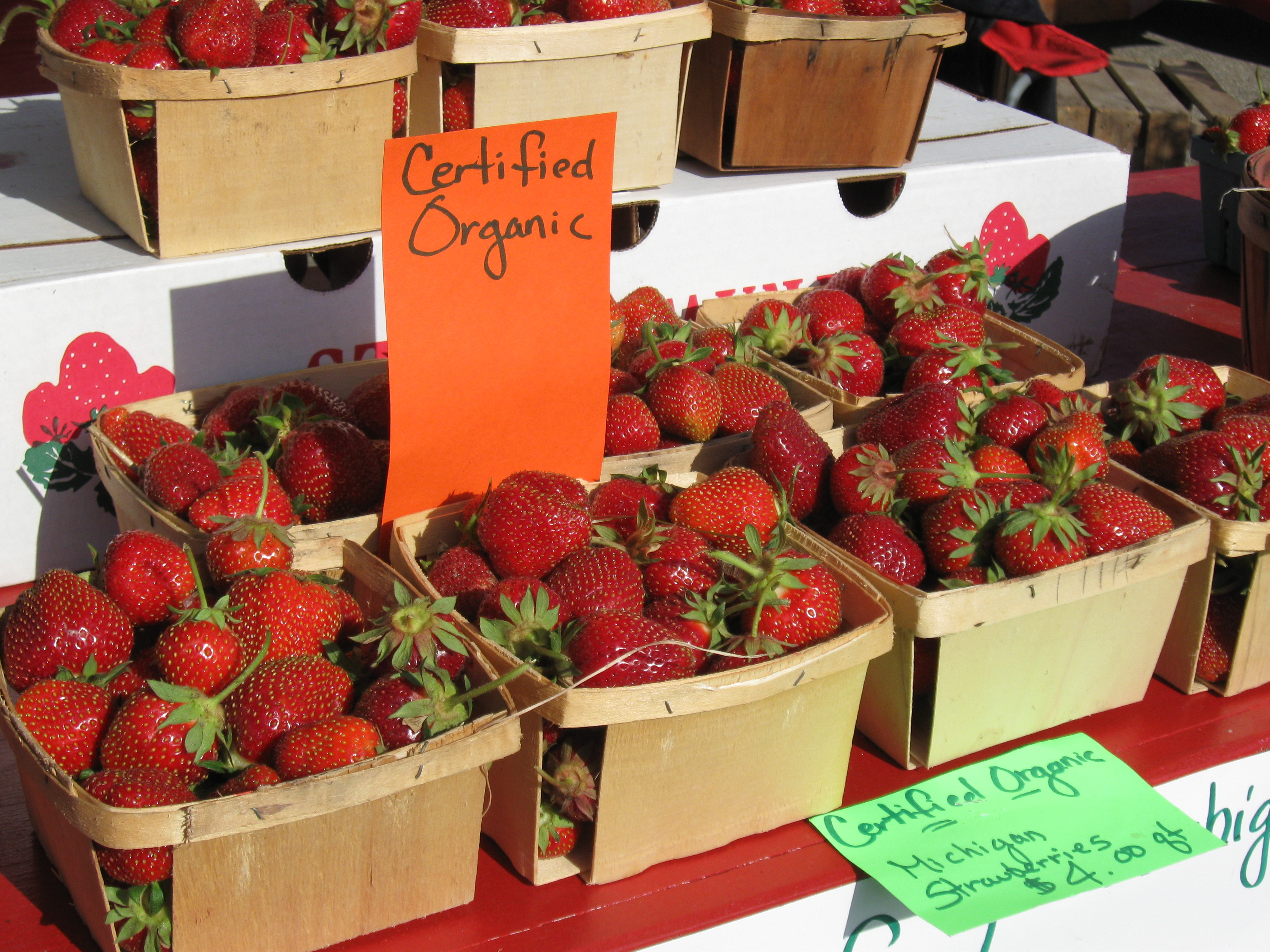
Is the local food movement strong in your part of the world?  Here in Michigan it has been for quite a few years, maybe ten or more.  Michiganders have been attempting the 100 mile diet (coffee lovers, avoid this one), joining CSA’s, and shopping at farmers markets.  Local chefs are successfully committing to local farmers and creating their menus to reflect gourmet dishes of what is in season.  I have wondered to myself, when can the rules be broken?  Is it okay to purchase non-locally produced food during this time of year when our seasonal produce is rising to peak harvest?  Can I only eat fresh tomatoes in July and August?  What about purchasing produce grown in Michigan at the local grocery store?  Is that okay?  Even if it was grown by a Michigan farmer living over 100 miles from me?  My answer is; do the best that you can do to support your local farmers, grow what you can grow in your Urban Farmscape, share with others, and learn to eat seasonally.  Eating seasonally is hard!  As you may know by now, I don’t like plants in the brassicaceae family.  So this fall, when cabbage, kale, and broccoli are in their season, I will choose to eat something different.  So I don’t know how I can stick to all the rules, I just try to do the best I can.  Living in Michigan is a little easier when it comes to food.  We are rich in our agricultural and horticultural crops and our farmer families have been growing here for generations.  Here are a few Michigan food stats from the Michigan Department of Agriculture, the Michigan Dairy News Bureau, and the American Egg Board.  You might be surprised.    Where did your dinner come from?

ASPARAGUS

Michigan ranks third in the nation

· Ranks second in acreage

· 2.5 million pounds

· Economic impact $16.5 million

BLUEBERRIES

Michigan leads the nation growing over one-third of all blueberries in the U.S.

· 600 family farms

· 99 million pounds-49 fresh and the other 50 for processing

· Economic impact $101.8 million

APPLES

Michigan’s largest and most valuable fruit crop

· 950 family farms on 38,500 acres

· 1.1 billion pounds produced

· Economic impact $800 million

· This year expecting 95% crop loss

GRAPES

Michigan ranks fourth in the nation

· 78,000 tons for juice and wine

· 14,600 acres in production with 2000 devoted to wine grapes

· Economic impact $27.5 million

DAIRY

Michigan ranks 8th in milk production

· 1,900 Grade A family farms

· 375,000 dairy cows, 2100 herds

· Producing 8.5 billion pounds of milk

· Economic impact $14.7 billion

EGGS

Michigan ranks 7th in the nation

· Over 10,000 laying hens laying 250 million eggs

· As of 2012, cage free production is 5.7% of the total U.S. flock size, of this 2.9% is organic

DRY EDIBLE BEANS

Huron County is one of the top dry bean producing counties in the country.

· 2500 growers

· 150,000 tons produced

· Over 20 types of beans

FLORICULTURE

Michigan ranks 3rd in the country

· 720 growers and producers

· In 2008 produced the second-most valuable crop of annual bedding & garden plants in the nation leading the nation in value of sales of: impatiens, begonia hanging baskets, geraniums, New Guinea impatiens, petunias, and potted veggies worth $187 million in sales.

 CHRISTMAS TREES

Michigan ranks 3rd in the nation

· 42,000 acres in production

· 3 million trees sold per year

· For each tree harvested 3 are planted

· Economic impact $41 million

CHERRIES

Michigan ranks NUMBER ONE growing 70-75 percent of the tart cherries in the U.S. and 20% of the sweet cherries

· 28,600 tons of sweets

· 242 million pounds of tarts

· Economic impact $53.8 million

· This year expecting 95% crop loss

CUCUMBERS

Cucumbers are grown throughout the state, primarily in the Southwest

· 96.8 million pound fresh

· Farmers grow pickling cucumbers in the thumb region

· Economic impact $18.5 million

CARROTS

Michigan ranks second in the nation

· 59.4 million pounds for fresh and processed markets

· Economic impact $12.6 million

TOMATOES

Grown for fresh and processing

· 132,600 tons produced

· 60 million pounds for the fresh market

· Economic impact $35.5 million

POTATOES

Michigan’s leading produce commodity and is the nation’s leading producer for potato chip processing

· 735,000 tons harvested

· Economic impact $156 million

Thank you Michigan Farmers!!!
Garden Do Over

22 Jul

“If I could do it over again….” That’s what I’ve been hearing in my garden conversations this week. The second part of the sentence is usually, “well there’s always next year”. Whether you are experiencing draught conditions, floods, weeds, bugs, diseases, overgrown plants, flopping tomato plants, gigantic zucchini or maybe you are just tired of the heat, don’t stop now. It’s time to plant again! Hooray! Right? Okay, maybe you aren’t as excited as I am with the thought of starting another garden in July, but really, it’s time to sow seeds for your autumn or winter garden. I know, I know, you are TIRED of working in the outdoors in temperatures over 90 degrees. Urban Farmerscapers don’t have the option to stop farming, just like our full time farmers don’t have the option to stop growing food for us. So, here are a few tips for your Garden Do Over.

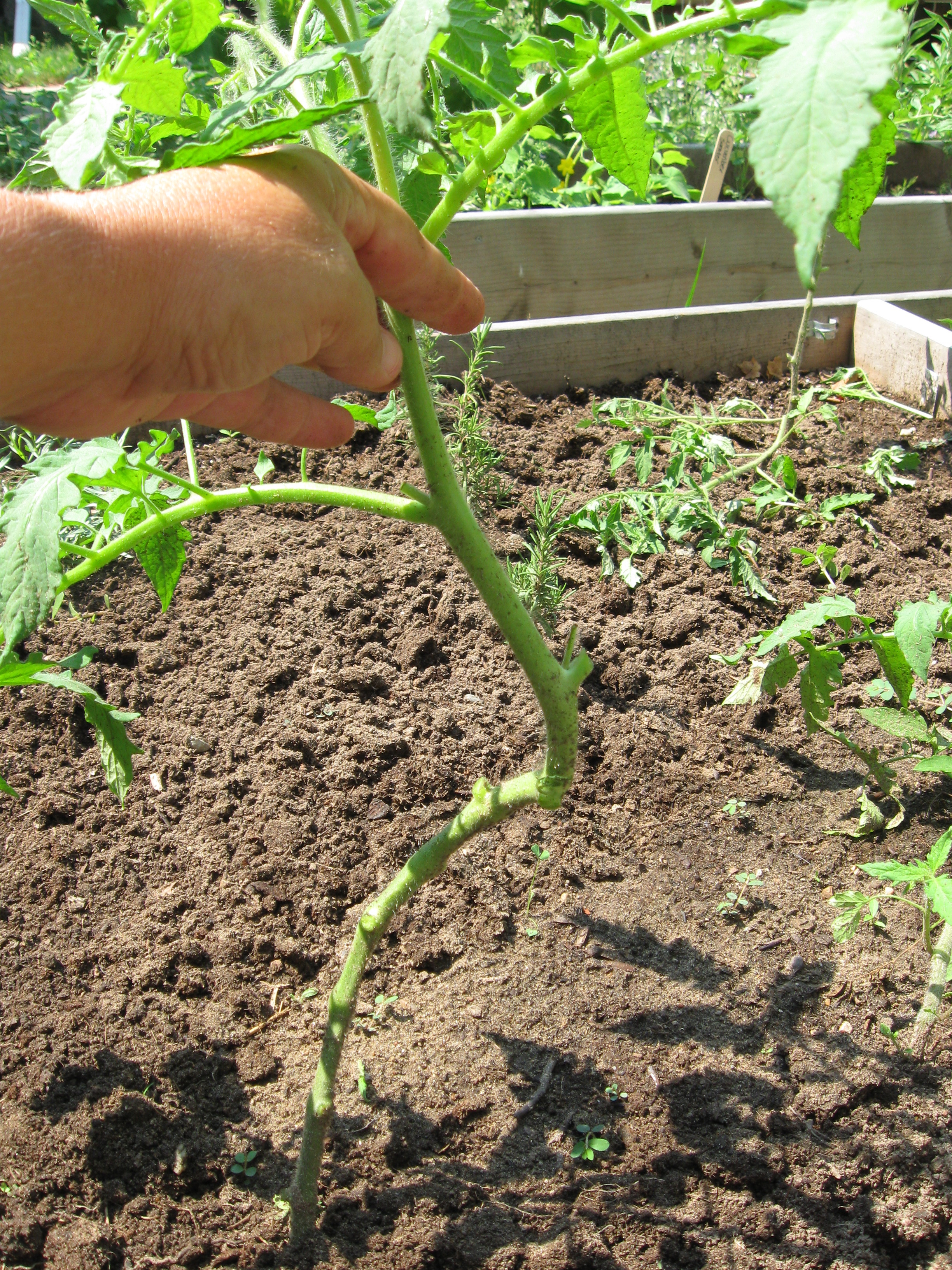
Roma tomato before pruning

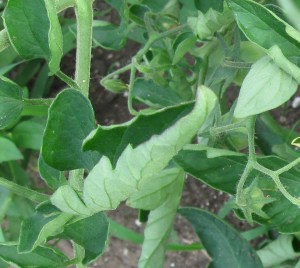
Stake and Prune. If you haven’t already, stake and prune any tomatoes or climbing veggies. Consider this the “Last Call”. Don’t be afraid to cut off the lower branches of tomatoes to ensure they stay up off the ground. If you are growing indeterminate types, the use of a stake is best. The taller the better. Prune all lower branches up to the first set of buds, or maybe fruit by now. Farmers are using trellising techniques that can hold these tomatoes up so high that a ladder is needed to harvest!

Roma tomato after pruning

Remove plants. There’s nothing wrong with pulling out a plant that has taken over or has gone to seed. I should have never planted this Clarey Sage in the space that I did, but I never grew it before, so I didn’t know better. We learn from our mistakes. I harvested the seeds and now I have space to plant some Cilantro or Parsley! Much better choices for My Urban Farmscape.

Harvest efficiently then replant. As soon as you are done harvesting all of the fruit in one area, prepare for your autumn garden. You should add equal amounts of greensand, colloidal rock phosphate, and blood meal. I use 5 pounds of each for every 100 sq ft., adding half at spring planting and the other half in the summer. Also add compost at this time. Then after “resting” for a week, re-plant you fall crop, making sure not to plant something from the same family. Here is a list of plants by family for your reference, along with notations for what you can plant in the fall.

Vegetables by Family

Plant a cover crop. If you have decided that your Urban Farmscaping days are over this year, then make sure you plant a summer cover crop to build soil and help eliminate weed volunteers. A good one is soybean, and for later, as the season cools, you could add some clover. Then make sure you shop at your local farmers market each week.

Eat your veggies!

Take good notes. I hope that you are taking notes of what worked, what didn’t, what you could do next year. I make comments on each plant, how it performed, how much I harvested from each plant, how many plants I planted, what varieties, disease or insect problems, dates of planting and harvesting. But most important, I write notes on whether it tasted good or not. That’s why we garden right? YUM! It’s full swing harvest season! How could you call it quits? Maybe you don’t need to do a whole do over, but maybe a spruce up and a re-plant. Need more inspiration? Read my post from exactly 6 months ago, January 22, 2012 titled “Winter Carrots”. YUM! Here’s a quick link.

https://myurbanfarmscape.com/2012/01/22/winter-carrots/

Urban Farmscape Vacation

15 Jul

Sometimes, you need to take a vacation from your garden. I know, I know, you wonder why I would ever think leaving the plants that I have been tending since they were little seedlings. Well, sometimes you just need a break from looking at your plants. As an Urban Farmscaper, it is easy to do since you probably have a small garden that you could find a friend or neighbor that would be happy to water for you. When I had my organic farm, there was never the possibility of leaving, not even for even a weekend. Winter time was the only possible vacation time. Thank you FARMERS for growing the food I don’t have space to grow!

This week my vacation is in Columbus Ohio. I bet that comes as a surprise. Who would vacation in Columbus? Well, I am here for the Ohio Floral Association’s Short Course, which is probably the biggest horticulture event in North America. I know what you are thinking, what vacation! This vacation is still all about looking at plants!

Joe Lamp’l
photo courtesy OFA

Sam Kass
photo courtesy OFA

Today, the keynote presentation will be given by Joe Lamp’l , who you may have seen on his PBS series, “Growing a Greener World”. Then on Monday, Sam Kass, White House Assistant Chef and the Senior Policy Advisor for the Healthy Food Initiatives will be presenting “Gardening’s Positive Impact on Our Communities & Our Lives”. These are two amazing gardeners and I am excited to hear them along with the many MANY other presentations and workshops. I will have to share with you in a later post what I have learned from them. For today, I will share with you my visit to the Franklin Park Conservatory & Botanical Garden.

Upon entering the gardens, I was greeted with beautifully landscaped grounds and I could see the roof top of the conservatory above some trees. The road was winding and a sign listed directions with arrows pointing to where you should go. I headed toward the Scott’s Miracle-Gro Community Garden Campus.
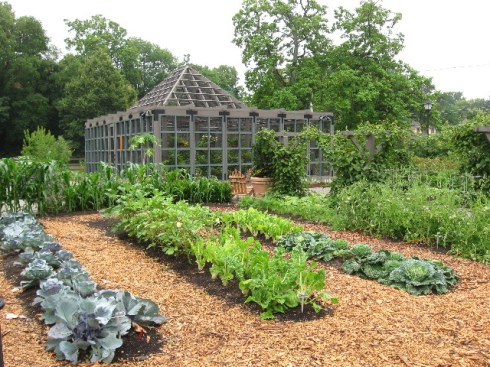
Potager Gardens

As I approached the entrance, I thought to myself, Wow! These community gardens are amazing! But where is all the food? Then as I strolled I saw that I had entered the Barbara and David Brandt Family Potager Gardens. I learned that a “potager garden” is the English version of our “kitchen garden”. It had a very cozy, but formal feel to it; I didn’t even notice the rows of herbs and veggies. The longer I lingered the more beautiful it became. The design had such attention to detail and visually it was very nice. As I wandered and became totally engulfed and lost in the garden, then I turned and stumbled upon the community garden.

There are 40 plots, and there were just as many garden designs as there were gardeners. I lost track of time admiring the veggies, herbs, flowers and fruits. Not a hard thing for me to do. I did eventually make it to the conservatory.

Community Garden Plots

I’m really excited to meet breeders and growers and to learn about the new varieties that will be available for next year, whether it’s food or ornamental plants. And yes! Organic and sustainability are among the talks. Oh! I also got a sneak peek at some amazing containers that will be PERFECT for your Urban Farmscape. I love gardening and growing plants. Can you tell? So maybe I’m not looking at my garden, but I’m always looking at plants.

For more information on the Franklin Park Conservatory and Botanical Gardens, including special events, visit their website at www.fpconservatory.org If you want to know more about their community garden, call 614-645-5952. It’s worth the trip, even if you aren’t a plant lover, when you visit, you will see the largest collection of Dale Chihuly’s glass artwork from 2003-2004 owned by a conservatory or botanical garden. Amazing! And Columbus is a pretty cool city. LOTS of urban farmscapes. So, where is your favorite community or public garden?

Chihuly Glass

So… what’s YOUR problem?

8 Jul

Remember in the spring, when the warm weather and sunshine felt so good, and how much fun it was planting seeds and plants in the garden?  Remember how that vision of germinating beans pulled at your heartstrings, so proud of yourself, you paused in amazement with life.   Visions of organic veggies and fresh-cut flower bouquets filled your mind along with sharing your bountiful harvest with family and friends.  Life is good you told yourself.  Then you went on vacation for a week, fun and sun, and when you returned home, the first thing you did was run to your garden, arms wide open, excited and shouting to all of your garden plants, “I am home!”  As you get closer, you see wilting chard plants, holes in the cauliflower leaves, the weeds have taken over your pepper patch, and where did that giant zucchini come from?  Oh my!


No matter where you garden or what you grow, you are going to have problems.  When you work every day, every other day, or even once a week in a garden, you start to get to know the plants.  You start to understand their feelings when they aren’t getting enough rain, or there are too many clouds, they weep, they really do.  Ok, maybe it’s not what they are feeling, but you know they aren’t happy.  What about bugs?  How many bugs are okay to have chomping away on your plants leaves?  One, two, ten, none?   Are they good bugs or bad bugs?  The first thing that you need to do is to determine if there is a problem or not. 


Scenario # 1:  I noticed that the cauliflower didn’t look too good this week.  The leaves were becoming all curly, weird, somewhat distorted.  I only have 4 plants in the brassica family in my garden, because I don’t like any of them, I don’t like to grow them, but I did plant these 4 for my family, because they like them.  Anyway, yes, maybe I ignore these plants a little, but I couldn’t help but investigate a little more.  So, upon a closer look, what I found rolled up in the center leaves were disgusting little creatures.  Problem or not? 

In this scenario, upon further investigation, I can see that I am dealing with aphids.  Aphids LOVE to suck on plant juices which will eventually kill it.   You will always find them at the newest growth.  Their natural enemies are lady bugs, but I haven’t seen any of those around.  For now, I will spray and wash the plants with soapy water and smash them with my fingers.  Watch them daily, and if they continue, start to use insecticidal soap per directions.  This should take care of the problem, but you have to stay on it.  You can’t let this go.  They multiply fast!  Or, I could pull them out of my garden….but then my family would be upset.

Scenario # 2:  On one of my tomato plants the leaves have been curling in an upward way.  Almost to the point where they look like a tube.  I can see that the little cherry tomatoes are developing okay, and noticed that the other tomato plants next to it didn’t look the same.  They are different varieties, but the leaves just looked odd.  Maybe they have a virus or something.  Problem or not?

It appears that the plant is expressing a physiological disorder.  No virus or disease problems, no insects, just a possibility that it has been too hot and this is what the plant is doing to deal with it.  I found a good explanation at http://agdev.anr.udel.edu/weeklycropupdate/?p=3228  so no need to do anything.

Scenario # 3:  While I was crawling around my squash plants weeding, I noticed these little metallic brown balls on the leaves.  I found some on the tops of leaves, and also on the bottoms of some others.  They look harmless, and don’t seem to be doing anything but sitting there.  For now I will just leave them and hope to remember to keep an eye on them.  Problem or not?

These “little balls” are actually eggs of squash beetles.  You can smash them as soon as you see them.  That’s easy for an Urban Farmscaper to do, but not for a large-scale farmer.  I found some really good information on how to deal with these and other cucurbit eating bugs from Clemson: http://www.clemson.edu/extension/hgic/pests/plant_pests/veg_fruit/hgic2207.html

I like to use deterrents such as hot pepper wax spray or garlic spray initially to keeps pests away from the garden.  They are bound to find their way in there.  If you suspect a problem,  the first thing you need to do is  observe the symptoms, identify the pest, and know when it is a problem and when to act.  This is also known as Integrated Pest Management, or IPM.  If you aren’t already practicing IPM, learn more at the Michigan State University IPM website. http://www.ipm.msu.edu/  Knowing if there is a problem is the first step, and how to deal with it in a sustainable manner is the next step to having a healthy garden with a bountiful harvest.   So..what’s YOUR problem?

Watering Basics

1 Jul

Typically in Michigan, we don’t worry about dought issues until July. Wherever you live, I think you would agree that weather hasn’t been very typical this year. I was visiting with my cousin who lives in northern Florida, and she planted her tomatoes which were soon drowned in their floods. It’s been tough at the community garden that I belong to hauling water back and forth from the water source to my plot. At least we have a water source. Other community gardens rely on rain, or connect many sections of hose together to get water from a donor’s home or apartment.

Rainforest Ecological Sprinklers

This year at My Urban Farmscape, I’m using a Rainforest Ecological sprinkler. I love how I can adjust the spray to reach as little as 6 feet up to the full 15 feet width of my garden. In this picture you can just see the green heart-shape which helps to break up water droplets. It’s time for me to raise this spike sprinkler or switch to the tripod sprinkler.

Now that plants are maturing in the garden it’s important to remember to water deeply. This will encourage roots to reach deeper and make for a stronger plant. So water longer and less often. Mostly, watch your plant. It’s okay if it starts to wilt a little. Look at all the plants around that are thriving in this crazy summer weather. Plants are tough and they do a good job taking care of themselves.

For more information and video’s visit the Rainforest website at http://www.rainforestsprinklers.com/

Here are direct links to purchase on Amazon

Spike Sprinkler (in my photo above) Ideal for single small spaces and ability to connect multiple sprinklers together
Contech 300000812 Rainforest Spike Sprinkler

36″ Riser Sprinkler To get above your veggie crops you can locate this sprinkler in the smallest spaces

6 ft Tripod Sprinkler If you have a little more room in the garden, use this.  It is collapsable and easy to store and the best part is that you can adjust the clips on the legs if you have uneven ground.  At 6 ft off the ground, you can really water a larger space if you have it.

Magical Lavender Wands

24 Jun

One of my favorite plants is  lavender, Lavandula sp.  I love the way the foliage is a shade of grey-green, the purple flower spikes, but most of all, its delightful fragrance.  It’s easy to understand why it has been such a popular herb for cleaning as well as perfumes since medieval times.  In recent years, chefs have been using lavender flowers to add a bit of its floral notes to culinary delights such as lemonade, cookies, as well as more savory dishes.

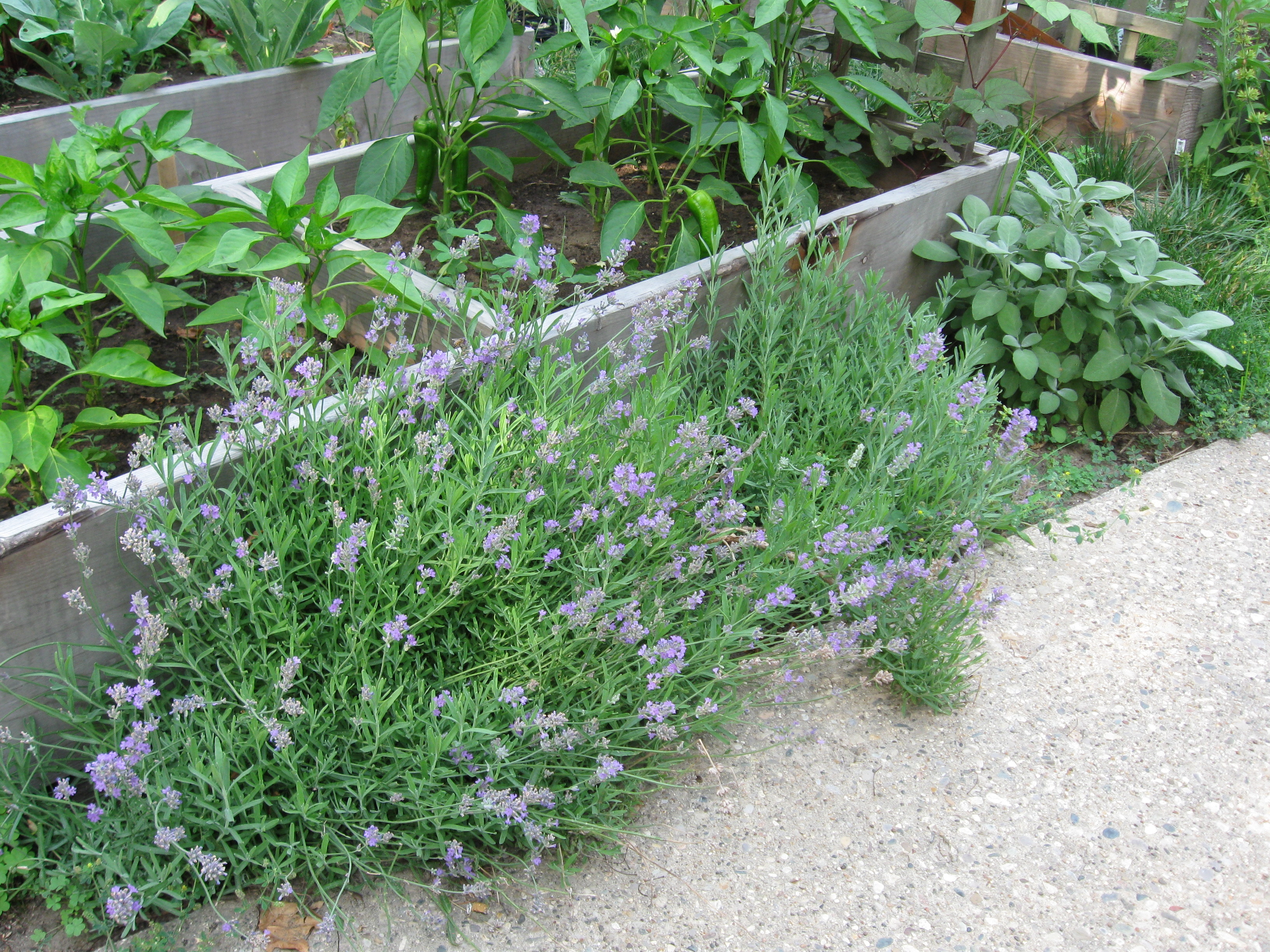
I live in zone 5, which is good for growing both English lavender varieties, Lavandula angustifolia ‘Munstead’ and ‘Hidcote’.  I have My Urban Farmscape bordered with Munstead.  It’s nice to smell it as I brush up against it while weeding.  I can harvest and dry the flowers to use for cooking or crafts.  I sometimes put the dried flowers in fabric bags and place them in my drawers.

English Lavender at My Urban Farmscape

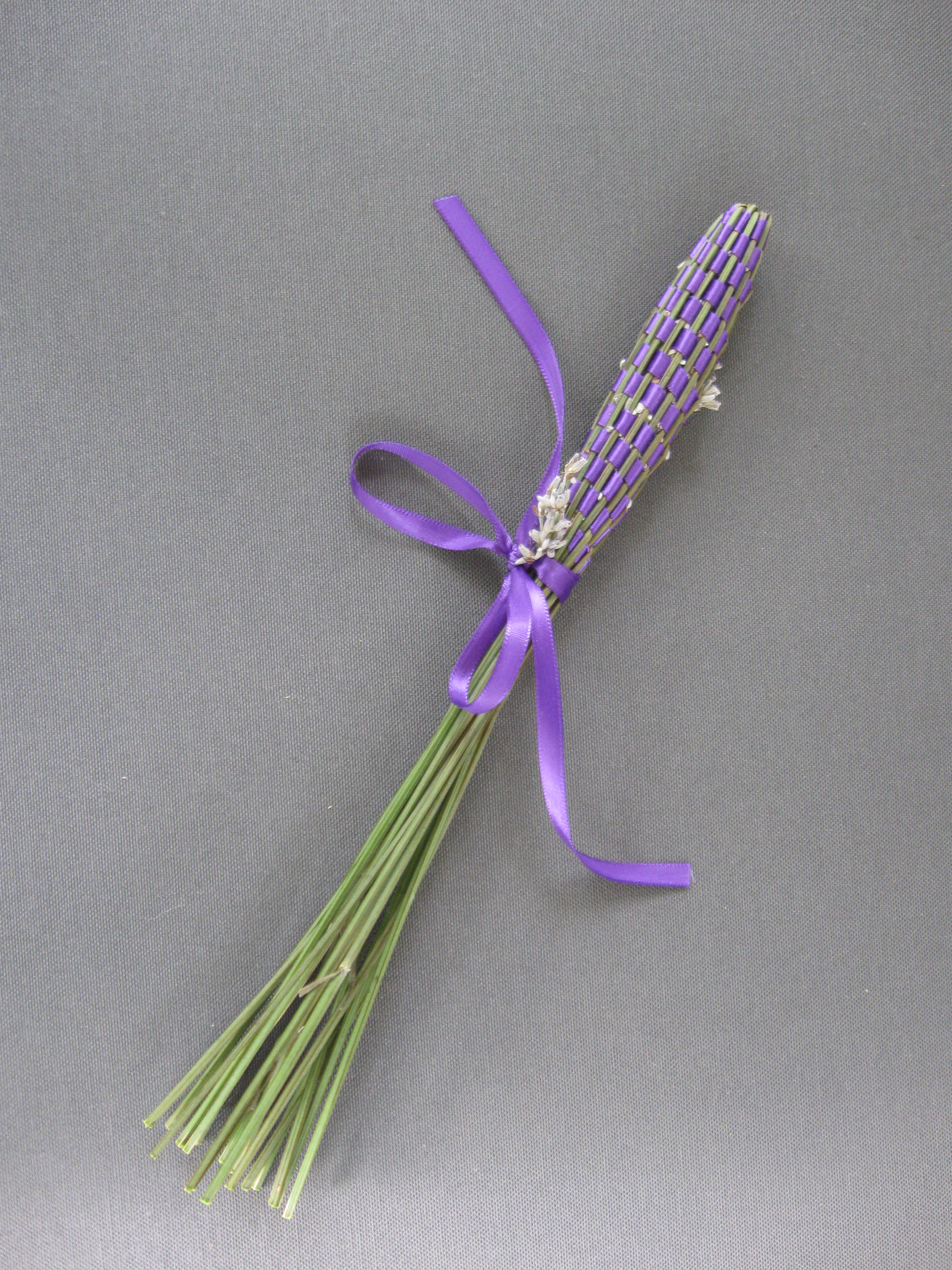
One thing that I like to do is to make lavender wands.  These date back prior to the Victorian era.  It is a simple way of preserving the flowers and stems and can be as decorative as I like.  When they dry, the flowers are tucked inside the satin ribbon-stem weave, and with a quick roll between my hands, the most wonderful fragrance is released.  The best variety for making lavender wands is Lavandula x intermedia ‘Provence’ because it has such long stems and the oil content is so high.  It grows well in zone 6 and up.  So I wondered, what if I planted Provence in a garden tucked away in a little warmer microclimate, maybe I could grow this. I tried and have had been growing Provence for two years. Maybe luck. 

Top = Provence Bottom = Munstead

To make lavender wands, regardless of the variety you have, just follow these simple steps:

Harvest the lavender flowers at their peak, just as the lower petals start to open.  Do this in the early afternoon on a sunny day which will allow the flowers to be dry from any overnight dew or moisture from earlier rains.

Cut the stems as long as you can, and count out an odd number.  I used 21 for this lavender wand.  For Hidcote or Munstead, I would use a smaller number of stems or you will end up with a really fat wand, like a lollipop.

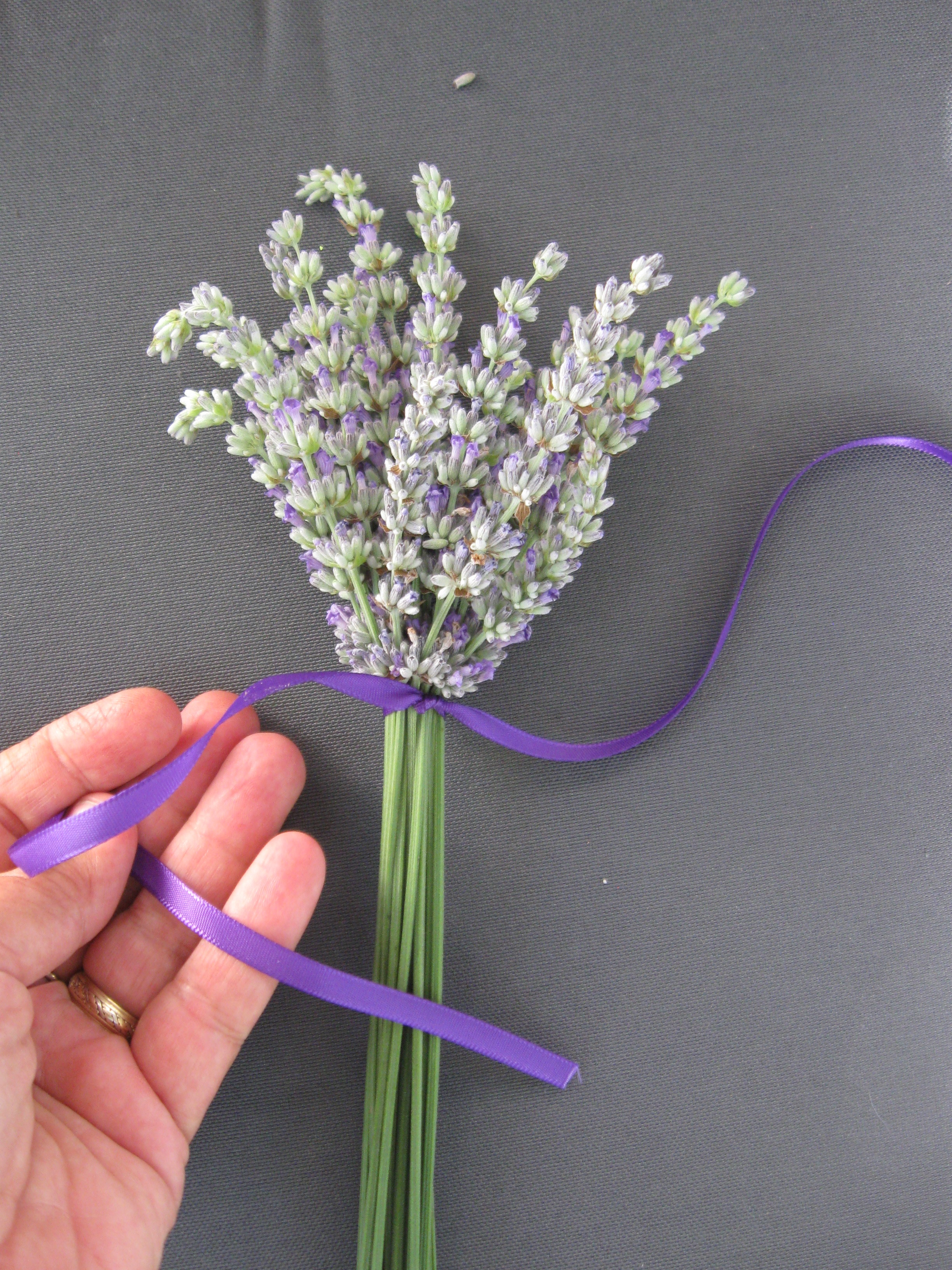
Line up the flowers so that the bottoms of the flower stalk line up.  Wrap the stems just below the flowers with a satin type craft ribbon that is ¼” wide.  You can use any color.  I like to be traditional and use purple.  Tie the ribbon in a knot tightly.  Leave a tail about 6” long, and don’t cut the rest of the ribbon from the spool just yet.  This is the part you will weave in and out of the stems.

Flip upside down and while holding the bunched flowers, start to fold the stems down over the flowers until they are all folded over them.  Keep the ribbon tail inside with the flowers.

Taking your ribbon still connected to the spool, start to weave over and under each stem, creating a basket weave.  Once you get to the third row it will get easier.

Once you have woven the ribbon to the end of the flowers, and the stems meet each other, tie the piece that was left as the tail and the piece that is still connected to the spool and tie into a knot then into a bow.  Cut the ribbon from the spool and even up the ends of both pieces.

Now you can do with them what you please.  Tuck them away to add a pleasant smell in your drawers, give them as gifts, or wave them in the air to cast friendly magical spells over your garden.  I just like to leave them out decoratively around my house  and as I pass them by, I give them a roll between my hands and am quickly transported to that summer day when I sat on the porch while making them.

Strawberries, Shortcake, and some Jam

17 Jun

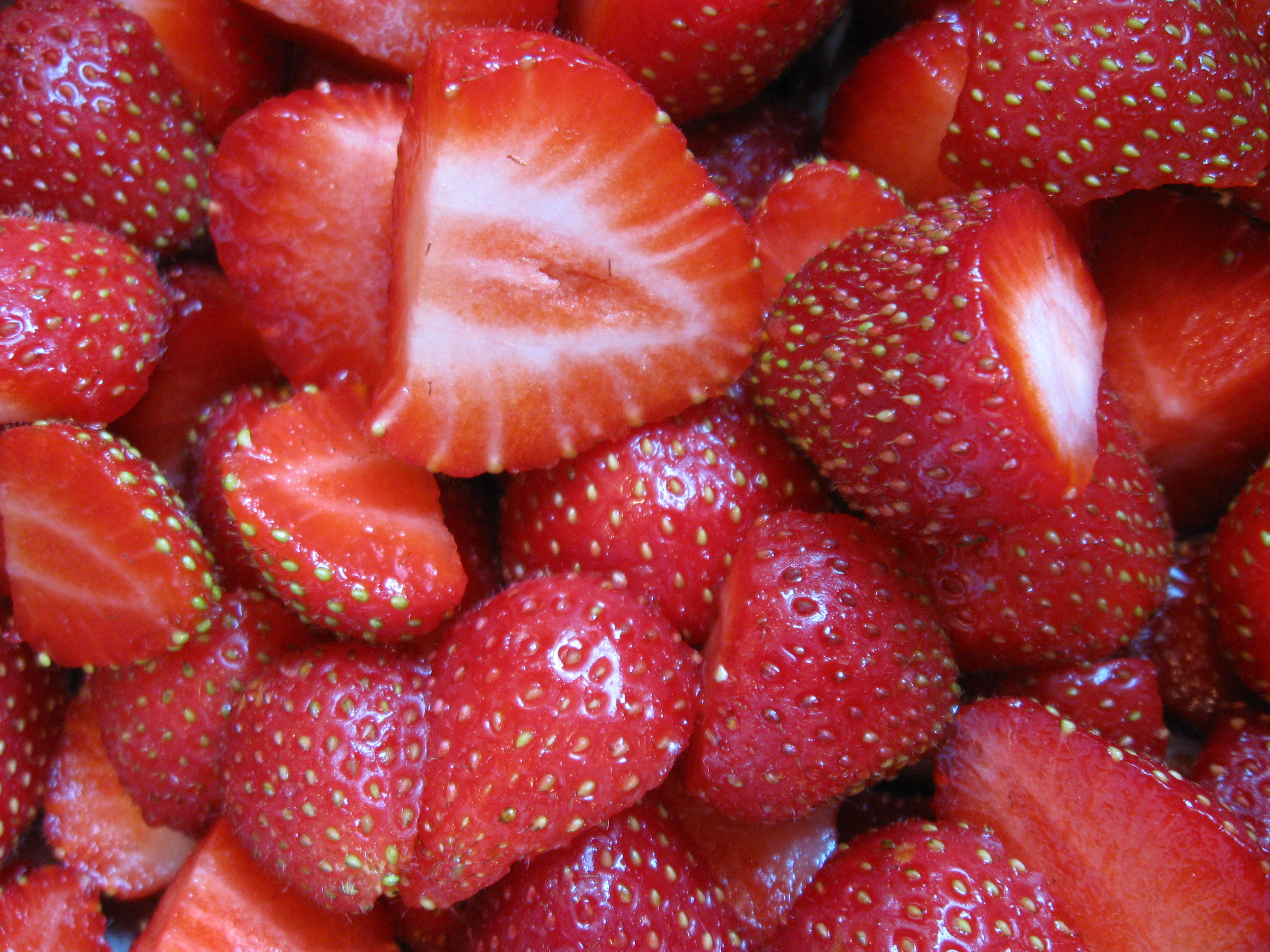
As long as I remember, it has been a tradition in my family to have strawberry shortcake on Father’s Day.  Not that it was the favorite dessert, but mostly because strawberries were in season.  We would pick somewhere between 30-50 quarts, go home, wash, cut, bag and freeze them.  Sure, Michigan strawberries may not be big like some other states, but they are the sweetest and most flavorful berries on this earth.  So of course dad loved them, they were “sweet like him” he would say.  Especially when they were freshly sliced, allowing their sugary juices to escape as they were poured over top of a freshly baked biscuit stuffed with vanilla ice-cream.  Final touches of a little whipped cream and then strawberry shortcake dad’s way was ready for him to enjoy.  I preferred fresh strawberries over ice-cream, sometimes a shake, or just a bowl of plain fresh strawberries.  Still to this day, at least weekly, I will have a peanut butter and jelly sandwich.  You guessed it, with homemade strawberry jam.  Now that I think about it, I eat strawberries and yogurt a lot, and indulge in an occasional strawberry daiquiri made from the frozen strawberries, rum, and some fresh squeezed lime. 

Strawberries are so easy to grow.  You can grow them in the ground, or even hydroponically.  There are June-bearing strawberries, which are strawberries that bear fruit in June or Ever-bearing strawberries, A.K.A. Alpine strawberries, which bear fruit continuously.  These are a little smaller in size, but have more flavor.  At My Urban Farmscape, I have planted some June bearing strawberries around my blueberries.  They will tolerate the lower pH that blueberries need to grow, and it will provide a nice groundcover underneath them.  I have both of my favorite fruits growing in raised beds.  I am growing Alpine strawberries from seeds, so I won’t have any fruit this year.  These do well in containers, especially hanging baskets, which makes a perfect choice for smaller gardens.  I have to be quick to harvest, or protect the bed with a fence to prevent squirrels or some other animals from eating them before I get them.

Almost ready for picking!

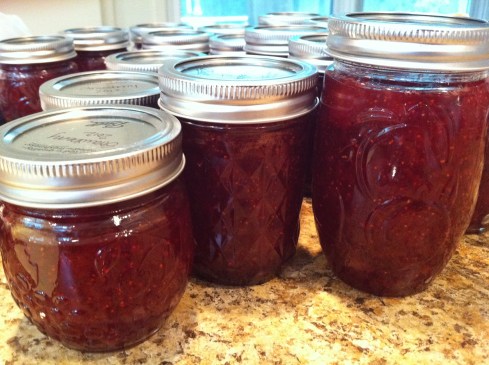
Since I love to make strawberry jam, I needed more strawberries than I could grow, so lucky for me that my favorite organic farmer is growing strawberries.  I only paid fifty cents more a quart for certified organic.  Not bad.  I use the recipe that is included with pectin of choice, Sure-Jell or Pamona’s Pectin.    Pamona’s can be found at most health food stores or online.  I like using this when I want to make a no or low sugar fruit spread, or use honey or maple syrup instead of sugar.  If you have never made jam before, I would recommend starting with strawberry.  It is so easy!

Ready for eating…

If you’re not growing strawberries in your Urban Farmscape you should start next spring.  For now, visit your local farmers market for fresh Michigan strawberries,  buy extra for jam, or maybe take dad to pick some at the local u-pick strawberry farm.  Then when you get home, bake some fresh biscuits, slice some strawberries and allow them to become juicy.  Allow the biscuits to cool slightly, but still a little warm so the ice-cream melts just a little.  Pour over a generous amount of juicy strawberries, and top with some whipped cream.  YUM!  Can’t be with dad today?  Send him a jar of homemade strawberry jam.  One of the sweetest of all Michigan treats.

Strawberry Jam

Sweet Basil

10 Jun

 Sweet Basil, Ocimum basilcum, is an easy to grow tender annual herb used primarily to flavor tomato dishes, sauces, pastas, meat, fish, or to make pesto.  It is found growing wild in tropical and sub-tropical regions of the world such as India, Africa and Asia.  It has medicinal uses primarily for the stomach and associated organs.  As for fragrance, basil is one of the most fragrant of the herbs.  Used in your landscape to border a walkway will delight your senses as you pass along.   Grow basil near your windows or patio as it will fill warm summer nights with its strong, robust aroma.  This is one of my favorite summer scents. In the meaning of plants and flowers, basil symbolizes friendship and would make a wonderful gift, especially for the host or hostess of a BBQ.  There are many types of basil, so make sure you grow the one you want.  Here are a few that I like.

Genovese   Classic Pesto Basil 14″-20″
Boxwood   Small leaves. Good in container 12″-16″
Lemon   Intensely fragrant, salad, dressing 10″-16″
Thai   Intensely sweet 16″-20″
Cinnamon   Finest tea basil 12″-24″
Spicy Globe   Small bush basil 12”

Left: Spicy Globe Right: Boxwood

How to Grow

Basil loves full sun and the heat, and will not tolerate cold at all.  Basil should be grown in temperatures above 60 degrees Fahrenheit.  Sow seeds directly in the garden once required temperatures are met, or start indoors about 4 weeks before transplanting outside around June 1.  Space 12”-18” apart, depending on the variety.  Smaller varieties can be planted closer together.   When you transplant, remove from container and loosen the root ball, then plant at the same depth that it was growing in the container.  If it was grown in a peat pot, make sure you remove the bottom of the pot and tear some of the pot. 

Basil loves to grow next to tomatoes and also grows well in containers, but doesn’t like to grow under dry conditions which most herbs tolerate.  These basil plants are being planted with an OMRI approved Waterhold Cocoblend Potting Soil by Black Gold into a self watering container.  This should be a great combination for this busy Urban Farmscaper allowing the need for weekly watering and minimal care.  The container fits well on the small porch of her apartment too.  This is Genovese Basil, and are planted closer that the recommended spacing.  Notice how they are staggarded.  Hopefully this will allow enough space and enough basil for a future pesto party!

Loosening roots from container prior to planting

 Harvesting

You can harvest the leaves by pinching or cutting the main branch prior to any flowers developing, leaving the new shoots that are at the side of the main stem.  These will grow and you will be able to harvest them in about 3 weeks.  Best to harvest early in the day, prior to flower development.  Continue harvesting throughout the summer, with the final harvest being of the whole plant about our first fall frost date of September 30.  You could possibly transplant to a pot and bring indoors, but basil seeds are so easy to start, you may want to start indoors with a fresh plant. 

PInch back or cut the main stem just above a set of leaves. Use the harvested part and then two more stems will soon develop where the lower leaves and the stem meet. You can see new ones waiting to grow in this picture. Soon you will be doubling the amount of basil you are growing.

 Storage and Preservation

Gently wash the leaves and place what you don’t use in a glass of water and leave on your counter.  Don’t refridgerate, remember, basil doesn’t like to be cold.  Best used fresh, but if that’s not possible, I have found drying to be the easiest method.  Basil will bruise and turn black, so be careful with the leaves when washing them.  To dry them, hang them upside down in small bunches (6-8 stems) out of direct sunlight, where there is good air circulation.  If there is nowhere to hang them, remove individual leaves and place in a small brown lunch sack.  Gently shake each day.  Once thoroughly dry, you can place in a jar.  Much of the flavor is lost to drying, so I LOVE to make pesto and freeze it. It keeps it beautiful green color because it is preserved in olive oil.  There is nothing like opening a container of pesto in the winter and making some bruchetta.   I will share my pesto recipe later this summer during my Pesto Party post.  In the mean time, enjoy it while it’s fresh!

For more information about Black Gold and their OMRI approved soil mixes, visit their website at http://www.blackgold.bz/  I have had really good results.

Today at My Urban Farmscape

3 Jun

This has been a very busy week at My Urban Farmscape.  We passed our frost-free date here in Mid-Michigan so I have been busy planting, then we had a frost-freeze warning three days after I finished putting in my last tomato plant.  Figures.  I was like the town crier running while yelling down the streets, “it’s safe to plant your garden!”, then overnight, I turned  into Frankenstein and had the whole town hunting for me while carrying their burning stakes because they lost their unprotected plants in the frosty night.  Well maybe it wasn’t as bad as that.  There’s always a risk during planting time, and this year the risk has been higher than others with the early spring and warmer weather.

Today I will share a few things that are growing at My Urban Farmscape.  It’s so hard to choose specific plants writing only weekly.  There are so many to choose from.  I will try to write more often, maybe I will tweet from the garden.  For now, here is a little picture slide show.

This slideshow requires JavaScript.

Honoring with Poppies and Flags

27 May

Memorial Day Weekend has always been a tradition of planting the garden in my family. This is about a week after our frost free date, so naturally, everyone is talking about planting the garden on Memorial Day. I do recall while growing up going to parades, or my mother visiting the cemetery to plant something on someone’s grave that I never knew. I think it would have been a cousin of hers, or my great grandfather. We would cook hot dogs on the grill and eat potato salad, raise the American flag on the flag pole, and if I was lucky, get to go to the beach. I never knew anyone that died in a war, although my dad and step dad both served state side in the U.S. Army and the U.S. Navy. I just found my grandpa’s draft card for World War II. My son is serving in the U.S. Marine Reserves. I am proud and thankful for them all; including the men and women I don’t know who have and are serving in the military. I don’t agree that war is always the answer, but is has, and will probably always be, the way of our world.

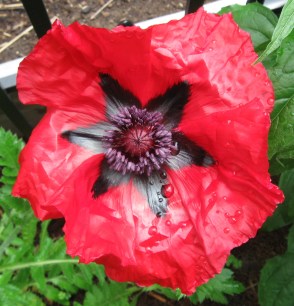
 

Photo of my son courtesy of Toni Elliott-Lee

I think that my generation fell short from many of the traditions of my parents. I hadn’t experienced a war in my lifetime, or at least one that I could remember, so I never felt close to it. After 9-11, I thought differently. And when my son chose the military, well, it really opened my eyes and I could never imagine what families experience when they lose someone due to war. I wanted to know and understand more about Memorial Day and what it meant, not just plant my garden this weekend. So by doing very little research,I learned a little history from the United States Department of Veterans Affairs website. This holiday was started to honor the people who have lost their lives while serving our country. Planting flowers on the graves of the people that died during their service on “Decoration Day” has been a tradition since its declaration by Major General John A. Logan three years after the Civil War ended in 1868. It was celebrated throughout the country on May 30th honoring those lost in the Civil War by the end of the 19th century. In 1971, Memorial Day was declared a national holiday and was meant to honor all service men and women who have died in American wars.

Soon after the first distribution in 1922, the VFW adopted the poppy as the official memorial flower of the Veterans of Foreign Wars of the United States. You may be familiar with the paper poppies mounted on a green wire with a white paper tag being sold for a dollar at the intersections in your town by members if the VFW. These are assembled by disabled veterans or those veterans in need of financial assistance. This morning when I went out to my garden, this poppy had just bloomed overnight and now holds a whole new meaning. My garden will always have red poppies from here on out.

In 1971 Memorial Day was changed to the last Monday in May by Congress and in 2000, Congress passed and the president signed into law “The National Moment of Remembrance Act,” which encourages Americans to pause in a moment of silence at 3:00 p.m. to remember and honor those who have died in service to the nation. The change of date has caused some controversy, and there is an attempt to change back to the original date of May 30th.

So whether you are gardening or attending a parade, planting in a cemetery or cooking on the grill, whatever day, the last Monday in May, or May 30th, take a moment to honor those who have died in service. Now I will grow red poppies in my garden, maybe reciting the poem by John McCrae In Flander’s Field when they bloom, and as always, I will plant my garden and raise the flag while remembering those who served and lost their lives to make sure I have the freedom to do what I chose.