Peppers

1 Apr

Pepper, Capsicum annuum, belongs to the Solanaceae family, also known as the Nightshade family. Peppers originate from the warmer regions of the Americas and are used in kitchens all over the world. You may prefer the fresh cool crisp of a sweet bell pepper, or the spicy flavor of a hot pepper. Whichever it is, peppers are easy to grow in the garden, in containers and make a great addition to your Urban Farmscape. There are even some varieties used primarily for ornamental purposes.
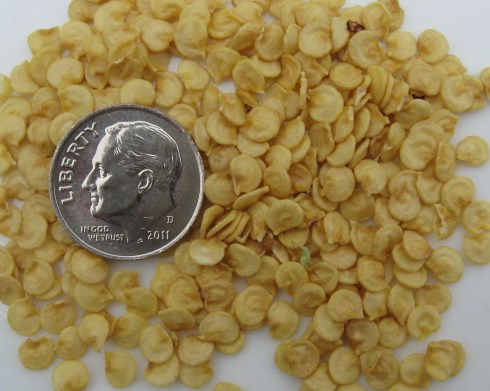
If you like to start seeds indoors, now is the time. Plant seeds about 1/8 to 1/4 inch deep in a shallow container of a sterile seed starting media. Once the seeds are planted and watered it is important to keep moist at all times during germination. This can be achieved by using a plastic dome or with plastic wrap. I keep a spray bottle of water handy so I can mist the seeds as they germinate, almost daily. Peppers germinate best if you use a heat mat with temperatures ranging from 68 to 95 degrees Fahrenheit, with the ideal temperature being about 86. Pepper seeds germinate in darkness, so light isn’t necessary until after you start to see them growing, and then light becomes crucial to growing great peppers. Once you see the first set of true leaves you can remove them from heat mat and transplant to a small container or a 4-cell pack type container. A 4-cell pack is the plastic container that most annuals are planted in. If you are using recycled containers, make sure you have cleaned and sanitized it with something like a bleach water solution to kill possible diseases that may be transferred from the recycled container. Don’t be in a hurry to transplant into a larger pot. Best to plant in a small container, and then save the larger container for the final planting outdoors. Transplant outside in well-drained soil after all danger of frost. This is one of the plants I put outside in the garden last. Peppers like to grow in warmer weather in full sun. They also have a higher need for phosphorus and calcium so if your soil test shows a deficiency in either of these, make sure you add something like bone meal to your soil when planting. To find out more about how to get your soil tested, contact your local extension office. Refer to the earlier post from February 19, 2012 titled Starting Seeds Indoors for more tips.

Ornamental Peppers

I haven’t experienced any diseases or insects with peppers, but they may be susceptible to a few. Watch for signs of irregular growth or discoloration on the leaves for early signs of viruses. The best thing to do is plant varieties that are resistant. Keep an eye out for any insect problems, but don’t worry about any unless they are actually damaging your plants. There are a lot of good bugs in the garden too.
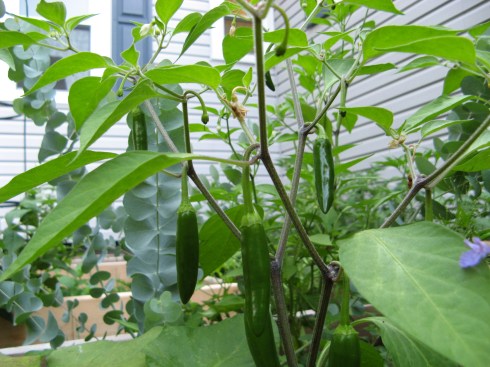
Jalapeno

You can expect to harvest your peppers about two to three months after planting. Sweet peppers will ripen first followed by hot peppers. In general, harvest your fruit first thing in the morning. For sweet peppers, wash and store in the refrigerator whatever you don’t eat right away. I freeze excess by cutting in half, removing the seeds, and placing in a freezer baggy. They will be soft when thawed, but work great for sauces and stews. My dad cans jalapeno peppers every year and gives them away to anyone that will take them. I love to dry cayenne chili peppers. I haven’t made a ristra yet, I just dry them and store them in a paper bag to later grind and use when I am cooking. It’s like my secret ingredient. Dried peppers whole or ground in a jar would also make a great gift. I also make Jalapeno pepper jelly. This sweet hot jelly is great spread over the top of cream cheese and served with crackers as snack. Maybe my dad and I should start a pepper gift basket. Hmmmm, I could be onto something.

In the U.S., California grows the most sweet peppers that you see in our stores, followed by Florida then New Jersey. As for chili peppers, California is first, followed by New Mexico then Texas. China is first in world production, followed by Mexico then Turkey. Pay attention when you shop during the winter months and see where the sweet bell pepper you have in your hand is grown. Check the label or the box. You may be surprised.

Lightning Bolt Peppers-Photo courtesy Baker Creek Heirloom Seeds

Baker Creek Heirloom Seeds has such a great variety of peppers with a wide range of colors of both sweet and hot. It’s still not too late to order from them. You may be able to find their seeds at some retailers. Starting your peppers a week or so later only means your harvest will be later, so if you want to grow something unique, check out their heirloom peppers at www.rareseeds.com Or if you would like to buy their book, click on the picture below.

Arugula

25 Mar

Arugula, Eruca sativa, belongs to the Brassicaceae family.  In the U.S. it is grown as an annual leafy green which provides a pungent bitter flavor used in salad mixes.  In Europe, where it is most common, it is sold as an herb. Arugula prefers to grow during the cooler seasons of spring and fall but there are a few varieties that will tolerate the summer heat and are slower to bolt.  Bolting is a term used meaning “to flower”.  Some plants will “bolt” to flower quickly when conditions tell the plant to hurry to flower and make seed.  Most cool season crops will bolt during warmer seasons.  So planting arugula in June might not be the best time unless you are growing it to collect seed.  It doesn’t overwinter, but its wild cousin, Sylvetta, Diplotaxis tenuifolia is slower growing and will grow well with winter protection such as in a cold frame.  The leaves are more lobed and tastes less pungent than arugula, but is more highly sought after by chefs according to Johnny’s Selected Seeds. 

Arugula should be directly sown in average garden soil, but you can start it indoors then transplant it outside.  Eliot Coleman suggests planting seeds directly in the soil 1 inch apart in rows 6 inches apart.  You can start arugula in a cold frame in late February.  Ideal germination is about 65-68 degrees (Fahrenheit).  Once germinated and the first true leaves are present, it will grow outdoors unprotected at 40 degrees.  The best temperature range would be 50-65.  Sowing every 2 to 3 weeks through the spring will ensure a continuous harvest. 

To harvest, you just use a pair of scissors and cut at the soil line.  You can have baby arugula in about 21 days, and full size leaves in about 40 days.  It’s best to harvest first thing in the morning.  Wash with cold water, and store any excess in the refrigerator.  Using a salad spinner is really helpful in eliminating excess water which will improve the storage quality, but its best eaten fresh. 

Plan your salad mixes by growing the leafy greens you love.  Mix and match, add baby lettuces, spinach, and arugula.  The possibilities are endless!


Contained Chaos

18 Mar

My gardening style is what I like to call, Contained Chaos.  I like the look of wildflowers growing in nature, but I also like neatly arranged plants, like using boxwood as a border, or rows of plants like grown in a farm field or orchard.  I think that’s why when I designed the culinary garden at My Urban Farmscape, I wanted my veggies to be planted in raised beds.  Each raised bed is laid out in neatly arranged patterns providing several individual sections to grow my veggies, fruits and herbs.   But that doesn’t mean that when the plants start growing outside of thier boundaries I want to hold them back.  They are allowed to wander and intermingle as much as they like.  It’s like, I try to control them, but then I give up because I know they will grow where they want.  Plants have a mind of their own right, or maybe, the instinct and desire to follow the sun.

When I decided to make my raised beds, I researched the options and chose to make them with 2” x 12” pine lumber.   DO NOT use treated lumber of any kind for growing anything edible.  I looked into options for preserving the wood, but then realized that the wood I chose will last a very long time, and by the time it was rotted, I would have gotten my money’s worth just using the plain pine and it wasn’t worth the added expense.  So, here is what I did.

April Garden

This is the space between my house and the driveway.  It is the sunniest space in the yard, which is what I needed for the culinary garden.  So…..out with the old and in with the new!  I didn’t remove the lawn though.  No need, since 10” of soil would be on top of it, it won’t grow any more.  I did have to transplant the shrubs and cut down an ornamental tree. 

The 2” x 12” boards were cut to the desired lengths.  If you don’t have a saw, you can ask your lumber store to cut them to the lengths you want.  They will typically do this at no charge.  It is easy to ask them to cut a 2” x 12” by 8’ board in half.  Do this for two boards and you will end up with a 4’ x 4’ garden.  I chose to use 3” deck screws to screw them together.  There are fancy type corners you can get, but it was getting a little too expensive for my garden.  Some of my beds are 2’ x 8’ or longer, so I added a board in the center for additional strength and/or to keep it from bowing.

Autumn Garden Showing Raised Bed Design

Once the boxes were made, they were place directly on the ground.  I filled them about 3/4 full with topsoil.  If you don’t have access to free topsoil, then try to purchase it by the yard.  It is cheaper.  Otherwise, you will have to buy it by the bag.  A 4’ x 4’ box takes about 1/3 yard of topsoil to start.  I then mixed in compost to the remaining portion, ending a couple inches from the top.   My cost for a 4’ x 4’ garden last summer was about $25.00 each.  That is the wood and the topsoil and compost.  You can make these any size you like, and they will fit in most every Urban Farmscape.  These will last for years.  If the ends start to come apart or the boards warp, I will make small adjustments as they come.  I just found this method to be the most practical and affordable. 

September Garden

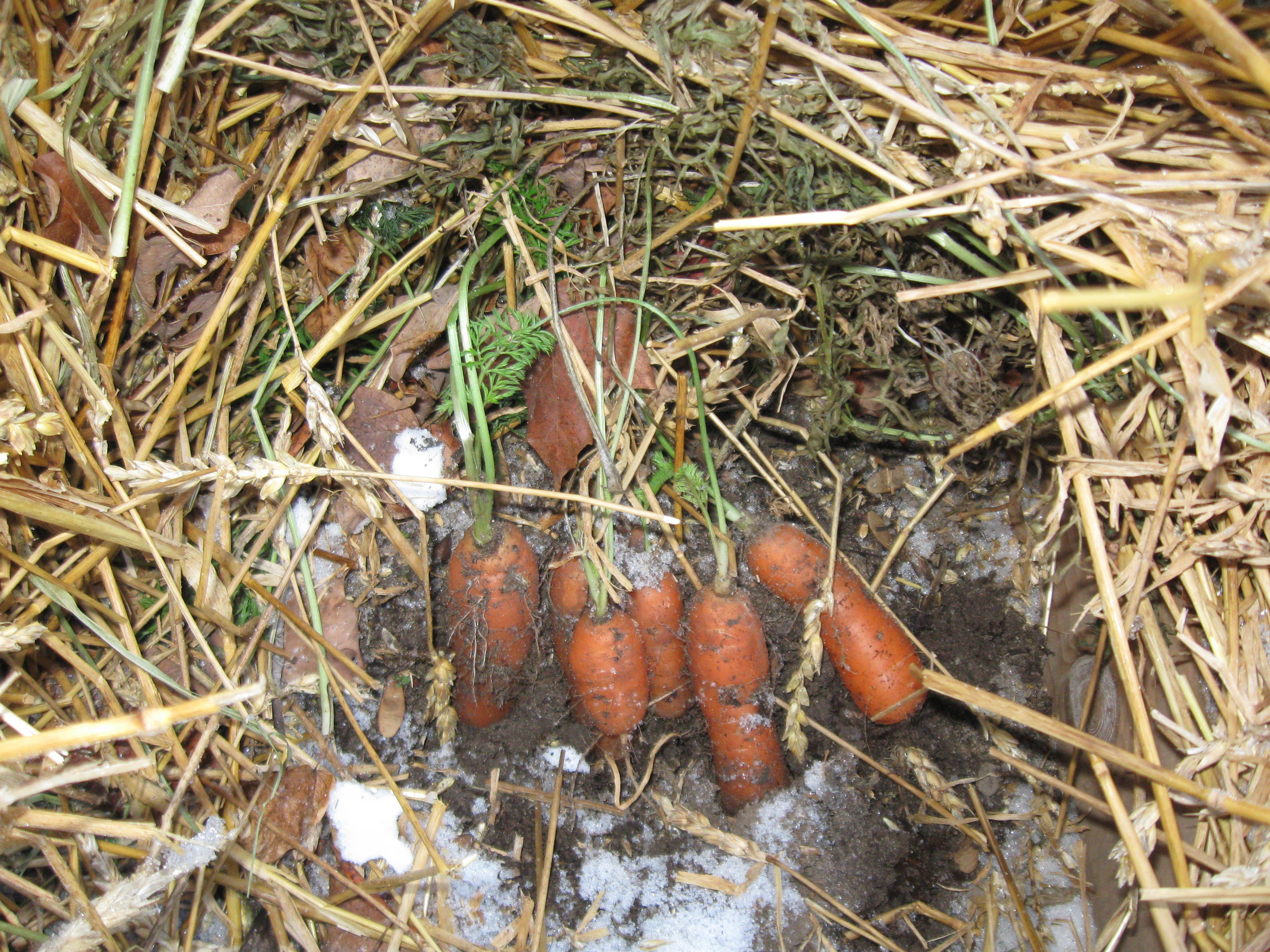
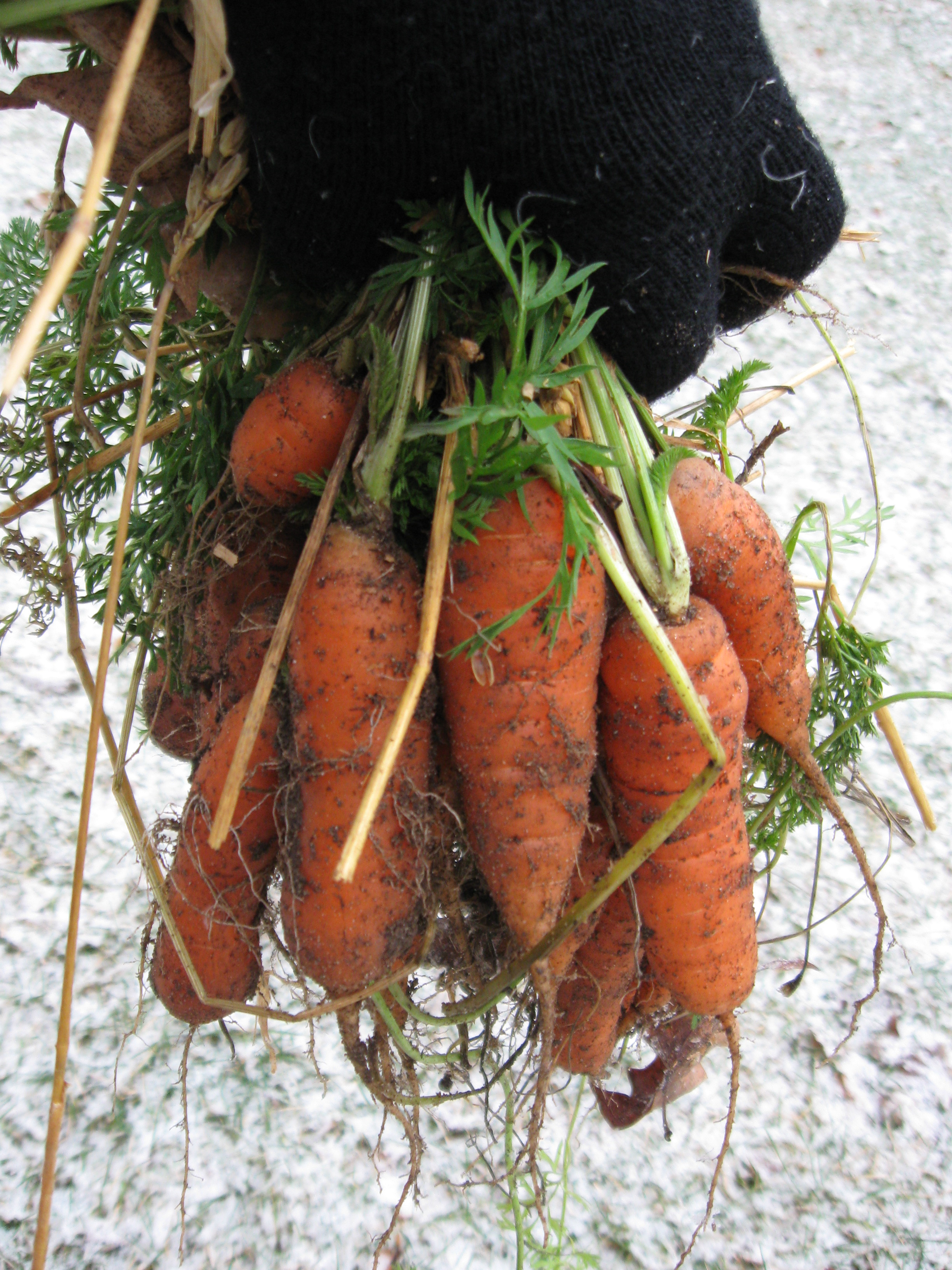
The first year I was able to harvest a bushel of tomatoes from a 2’ x 12’ raised bed.  I spaced the tomatoes diagonally about 2’ apart.  So in a 2’ x 4’ space I was able to plant 3 tomato plants.  They were indeterminate types which I pruned and staked them.  I will talk about that more when I write about tomatoes.  I also planted blueberries, corn, cucumbers, carrots, peppers, squash, beans, garlic, parsley, oregano, basil, sage, thyme, and several edible flowers.  I planned space for cold frames also.  I overwintered carrots under straw (see poem on Winter Carrots).

Winter Garden

This will be the second season for the culinary garden at My Urban Farmscape.  The warm weather we have been experiencing has made it EASY to clean up and prep my gardens, but the only thing I am planting are my cool season crops such as spinach, arugula, lettuce, carrots, beets, and radishes to name a few.  And that is still in my cold frame (open ends and tops off for now).  Don’t be fooled by Mother Nature!  Our frost free date is about May 15th, still a long ways away.  For now, continue planning and if you like your garden chaos contained like I do, start building your raised beds!  Before you know it, it will be time to plant for the summer!

Coming soon to a garden near you…

Signs of Spring…Finally!

11 Mar

You know how that first day is, the first really sunny day in early spring. You wake up in the morning and immediately feel the strong pull of nature’s song. You go outside and feel the warmth of the sun on your face, you see the birds fluttering about, and then you find yourself looking at the small wonders nature has brought to you.

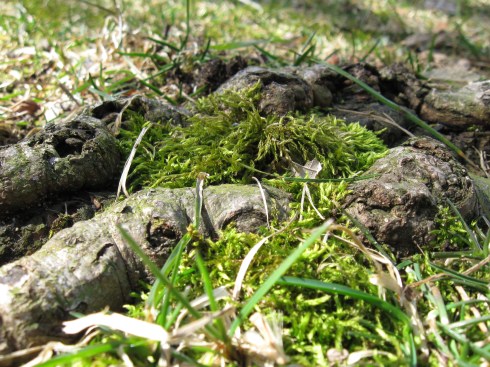
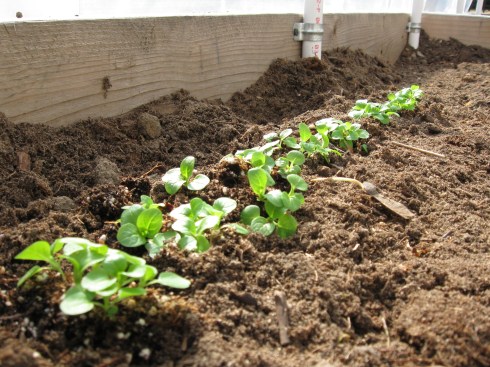
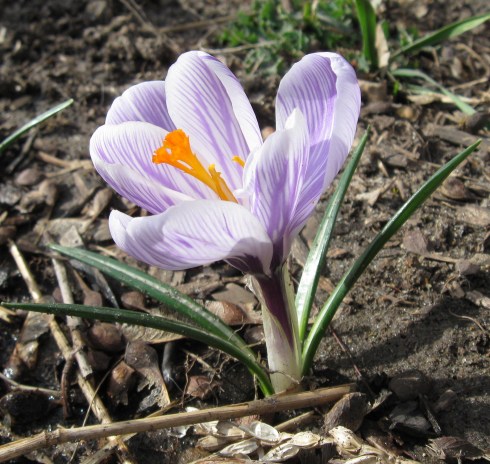
You notice the bright green in the lawn, not of turf, but of moss, and before you know it, the afternoon turns into the cleaning of garden beds, planting of cool season veggies in the cold frame, and watching the bees as they buzz amongst the first crocus blossoms.

You absolutely LOVE days like this. So do I and today was one of those days. I know I can’t get too excited about the garden, there are still nine weeks to go before planting the majority of it. So for now, carpe diem!

Spinach

4 Mar

Spinach, Spinacia oleracea L., belongs to the Chenopodiacea family, a.k.a., Goosefoot family where it originated in Central and Southwest Asia. An annual in our garden where it prefers to grow during the cooler seasons of spring and fall. The leaf types of spinach are either “smooth” which is somewhat flat like in this picture, or “savoy” which is wrinkly looking. In the warmer months it will “bolt” which means it will quickly produce it’s flower to make seed, thus slowing down leaf production, which is the part of spinach we like to eat. If you choose to collect seed though, summer is the best time to do that. Whether prepared fresh (my preferred method) or cooked, Americans consumed about 1.8 pounds per person per year in 2004. As far as world production of spinach at that time, China grew the most, followed by the U.S. and then Japan. Spinach is made up of about 91% water, and nutritionally, per a 100 gram serving, spinach provides about 2.9 g of protein, 0.4g fat, 3.6 g carbs, 2.2 g fiber, 99 mg calcium, and 2.27 mg iron. Go Popeye! Long ago in England it was said that spinach was used as a dye for Easter Eggs.


spinach seed

You can plant spinach as soon as the soil is workable or right now if you have a cold frame or low tunnel. Seeds will germinate in 5-6 days with soil temperatures about 70 degrees, 12-23 days with soil temps at 40-50 degrees, and up to 63 days at 32-39 degrees. I like to start my spinach indoors to ensure quick germination and then transplant outside about 2-3 inches apart in rows 8-12 inches apart. When the soil temperature gets above 50, I’ll sow seeds directly in the soil. Lately it has been hovering around 40 degrees in my cold frame.


Spinach prefers full sun but will tolerate some shade. Maintain a soil pH of 6-6.8. Spinach prefers to grow with an air temperature ranging from 40 degrees Fahrenheit to a maximum of 75. It is not susceptible to chilling injury which makes it a good pick for a fall/winter/spring crop. When grown under ideal conditions, you will be able to harvest leaves when mature about 37-45 days. It is best to harvest in the morning, wash, and store what you don’t eat in the refrigerator. In Eliot Coleman’s book, Four-Season Harvest he recommends the varieties “Tyee” for spring, “Steadfast” for summer, “Space” for autumn, and “Space” or “Winter Bloomsday” for winter. I have grown “Space” and “Tyee” and have been very happy with them both.

Starting to plant my early spring crops means that the gardening season is beginning! Even though we are experiencing the coldest temperatures and the most snow we have had all winter, my head is busy in the garden. I wonder if this is a disorder of some type. My family would say so. If you haven’t already, make sure you check out the garden planning tools at GrowVeg.com

My Urban Farmscape Winter Garden

Orchid Confession

26 Feb

Paphiopedilum


I confess.  I may be a lover of plants, and have a lot of experience growing them, but I don’t know much about growing orchids.  I do grow some, but I think it is mostly by chance and luck that they grow well.  After attending the Greater Lansing Orchid Society’s (GLOS) Orchid Show yesterday at Michigan State University, I confirmed with growers that once you find the right spot that makes your orchid happy, you will have no problem growing them.  But where is that?  According to the American Orchid Society (AOS), each type of orchid has a preferred location in your home and with proper care; GLOS tells me you could even have orchids thriving in your windowsill. 


Temperature ~ Orchids will tolerate averages of 75 during the day and 55-65 at night.  Don’t allow them to sit in a cool draft or in the direct path of a heater vent.

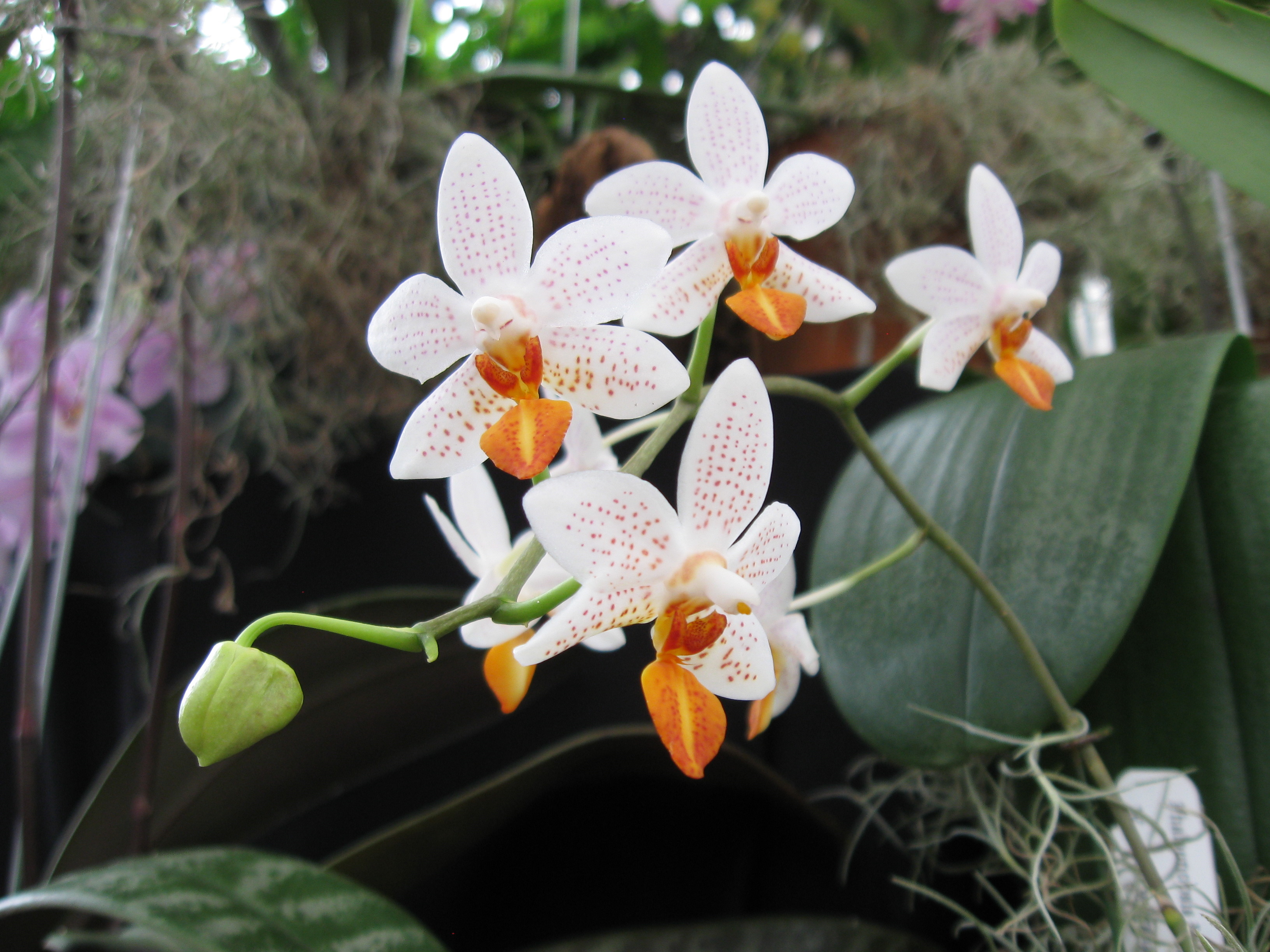
Phalaenopsis "Mini Mark"

Humidity ~ On average, home humidity may be about 20-30%.  Orchids prefer 50% humidity or above.  AOS suggests you group plants together or place on a gravel-filled humidity tray to raise it.  GLOS recommends 70-80% humidity.

Watering ~ Ah, the trick is….getting to know your orchid and what makes it happy.  I know some people that have the Phalaenopsis orchids that are watered with “three ice cubes per week”.  Interesting marketing, but cold!  Not all orchids will respond well to this, but, it seems to work for some.  I gather my orchids and put them in the sink, water thoroughly, allowing the excess to drain out, then put them back where they belong.  That works best for me since I only have a couple.  The key is to get the media wet, but not keep the orchid drenched.  A true balancing act.

Fertilizer ~ Fertilize with an orchid fertilizer, low doses and even lower in the winter.  Consistent fertilizing will provide the plant the necessary nutrients to flower and live happily ever after.  Easy right?

With over 30,000 species in this flowering plant family, the plant systematics is a little overwhelming.  So many types of orchids! I noticed this year at the show I took more pictures of the Paphiopedilum group, AKA, Paph or Lady Slipper Orchids. I must have been more attracted to them so, I bought Paphiopedilum “Oriental Limelight”.  I think it will do well in my bathroom which has a south facing window.  We’ll see.  For more information about growing orchids, visit the website of the American Orchid Society http://www.aos.org or the Greater Lansing Orchid Society at http://www.greaterlansingorchidsociety.com

Paphiopedilum "Oriental Limelight" Flower with an attitude!

Starting Seeds Indoors

19 Feb

Seeds germinate easily with a little help by providing the proper growing media, container, water, temperature, and light.

  1. Growing media for seed starting is what you plant your seeds in.  Think dirt, but it’s not dirt.   It should be fine in texture but most of all it should be sterile.  You can find several seed starting mixes out there but I have had the best luck using “No Damp Off” by Mosser Lee.  Simply, it’s a finely milled sterile sphagnum peat approved for organic growing.  A little goes a long way.  Avoid breathing in this light and airy peat.  Seeds carry all of the necessary nutrients to get them started so don’t be fooled by those with a lot of unnecessary ingredients such as fertilizers and wetting agents.   Most of these have not been approved for organic growing.
  2. It doesn’t really matter what type of container you plant your seeds in as long as it is shallow.  I use a lot of recycled materials that have been disinfected in a solution of 1 tablespoon of bleach to 1 gallon of water.  Plastic egg cartons, plastic veggie containers and some of the oven or microwave containers work well.  They only serve as a vessel to hold the growing media, seeds, and water for a short time.  Make sure they have drainage holes.  I use a 20 row seeder when I am sowing a lot.  These individual rows provide dividers when I want to sow several different seeds and it only takes up the space of a flat.
  3. The growing media needs to be kept moist.  I water from the bottom of the drip tray (the tray underneath the container) and allow the water to soak up.  I then spray the top with a spray bottle after sowing the seeds.  I’ll use the spray bottle daily to mist and keep the media evenly wet.  You can use a clear plastic dome that will increase humidity and prevent from drying out as quickly, or regular plastic wrap works well, but is a pain putting it on and off. 
  4. The soil temperature is more important that the air temperature.  Each seed has an optimum temperature for germination.  Detailed information can be found in the book The Seed Starters Handbook  by Nancy Bubel or in Knott’s Handbook for Vegetable Growers, Fifth Edition by Donald N. Maynard and George J. Hochmuth .  Odds are, in your home, if the temperatures are 70 degrees, the soil media in your little germination trays will be 70 degrees.  If you grow in the basement, like I do, it’s a little cooler, so for some veggies, like peppers, I will use a heat mat to increase the temperature allowing for improved germination.  Keep in mind that when seeds are germinated at their optimum temperature, you will see a more even, improved, and quicker germination.  Items such as this Germination Station with Heat Mat from Hydrofarm work great.
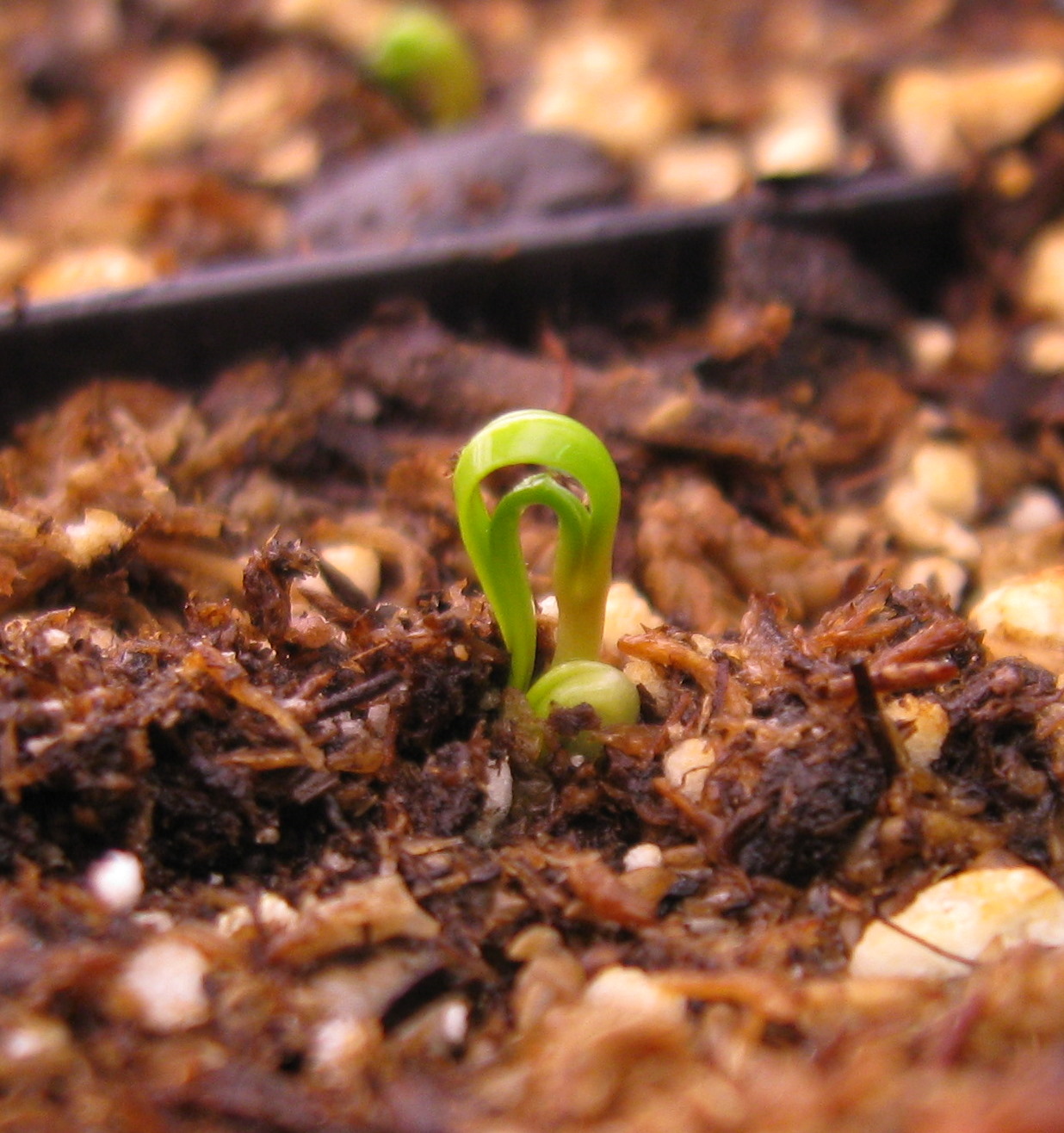
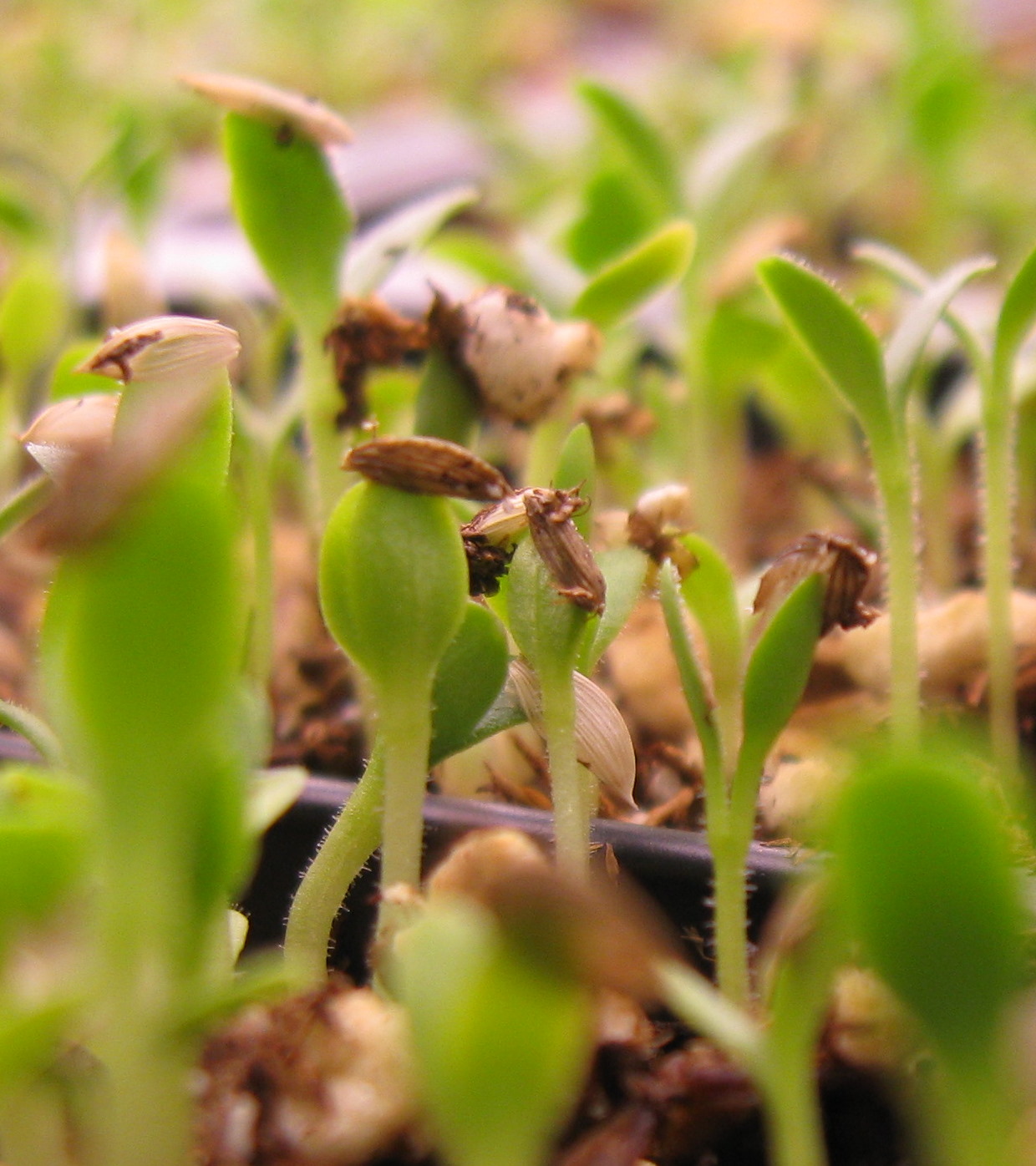
  5. Your seedlings will emerge at different rates.  You will notice the stem first, arching like a sea serpent with leaves to follow, roots beginning to anchor in the soil.  Within a day or so you will see little plants reaching toward the light with their cotyledon leaves.  At this time any plastic should come off and the lights should go on.  The cotyledon leaves are the leaves which hold all of the nutrients necessary for the plant to start growing.  The next set of leaves are called the “first true leaves”, which means exactly that.  Once this set of first true leaves unfold  the plant really starts growing and now is the time to transplant these new seedlings into larger containers or cell packs.  It is important to keep the lights on for 12-14 hours to allow for proper photosynthesis and to avoid stretching.  Providing proper lighting will encourage shorter, compact plants reducing that “leggy look”.  Even if you have a very sunny window sill, you will benefit by providing supplemental lighting for healthier plants.  For seed starting, full spectrum fluorescent bulbs work best.  These are available in many shapes and sizes.  The Two-Foot Grow Light from Hydrofarm fits well in most spaces.  If you have more room, this Four-Foot Grow Light will have enough space to grow two flats.  You will notice soon that the cotyledon leaves will dry up and fall off.  That’s normal so don’t worry!

Not all seeds require starting indoors, and some may only need to be started a couple weeks before planting outside.  I love starting seeds.  It gives me the option to grow so much more than what is available at the garden centers.  If you are hesitant about starting seeds, just try one new thing this year.  You may be surprised!


Click on the links above and below for more information on seed starting supplies!

 Hydrofarm CK64050 Germination Station with Heat Mat

 Growers Supply Company GS2211-4 4-Pack 22-by-11-by-2-1/2-Inch Perma-Nest Plant Trays, Green

 5 Pack of Durable Black Plastic Growing Trays (with holes) 21″ x 11″ x 2″ – Planting Seedlings, Flowers, Wheatgrass

Online Garden Planning Tools

12 Feb

There are several online tools available that would help make your garden planning easier.  You can find some for free; others are available for a small cost.  Play around with the free offers before you buy to make sure that the program will do all of the things that you want it to do.  The free planning tools may be good for a simple layout but the more involved you get with your garden, the more you should expect the planning tool to do, which may come at a cost.

Last year I used the Kitchen Garden Planner from Gardener’s Supply Company.  It was free and allowed me to plan rows any size or width.  There are 50 crops to choose from.  You can create an account and save your garden information on their website or print it out.  They also offer pre-planned gardens for you to follow which might be the best choice for a beginner.  This planner works well to get a general layout for a new garden.  http://www.gardeners.com

Vegetable Garden Planner is free and has more to offer.  You must register to become a full member giving you the ability to create your garden, a journal, upload photos and keep track of your information.  They also have smart phone apps.  I downloaded the app for my iPhone which provides a lot of plant and gardening information.  What I found most interesting and useful was the “Family Feeder Calculator”.  You can select a “vegetable”, “herb” or “rare”, and then how many people are in your family, and it tells you how many plants to grow.  I chose from a drop down menu two people in my family and then selected pole beans for the crop to grow.  The recommendation I was then given was to plant 40 plants! Most experience gardeners know that bean plants produce a lot of fruit so would make an adjustment, but for a beginner, you may become known around your neighborhood as the bean person, which might not be all bad if you are really into beans.  There is mention on the bottom of the page that it does now account for succession planting.  Up to 90 crops are available with this program.  http://www.vegetablegardenplanner.com

            The Interactive Vegetable Garden Planner from GrowVeg is what I will be using this year.   Go to GrowVeg.com  and sign up to use the 30 day free trial and if you like it, you can purchase an annual membership for $25.  With this program you can plan your garden to the inch or chose metric measurements if you like.   You have the option to design your garden using traditional rows or by the Square Foot Garden method.  I will go into further detail about the Square Foot Garden method in a future post.  I use a lot of this in My Urban Farmscape.  The program can select from 5000 geographical locations which will allow your garden plan to be specific to your growing region.  This is important because different regions will grow and plant different plants.  GrowVeg will e-mail you updates for planting reminders based on our growing region twice a month.  What!  Once the gardening season is in full swing, I am so busy, I could use all the reminders I can get!  You can select from 130 vegetables, herbs and fruits.  They even provide information regarding crop rotations and warns you when you are about to place a crop in a location that might not be suitable based on last year’s plan.  This is important in order to prevent diseases and deter pests that may harbor in your garden from the previous year.  You can undo, copy and paste allowing you to create and re-create your gardens.  I’m sure that once you get started, you will love everything GrowVeg does.  When your garden is all designed, you can click on the plant list button to get your complete list of plants and quantities.  Awesome!  All you need to operate the program is Adobe Flash Player.  Try it free for 30 days and you will probably be able to plan your initial garden in that time.  But gardening doesn’t end in 30 days and neither does garden planning!  It will be worth the twenty five bucks to become a member.  GrowVeg has just launched their version for the iPad and expect their iPhone version be available toward the end of the year.  I draw and sketch my gardens initially,  then I finalize with a digital plan using all the tools and resources available to me to ensure a successful planting and growing season.  It’s almost time to start planting so finish up your planning with your favorite online garden planning tool.  Be sure to check out GrowVeg!

Online Garden Planning Tool

Where Does Your Garden Grow?

29 Jan

Whether you are a first time gardener or a master, a lot of planning is necessary to ensure a successful garden. So…First things first. Where is your garden going to be? A great goal would be that your whole yard becomes your Urban Farmscape, but that could be a huge task, so it’s best to start small. A side yard, your front yard, the space outside your kitchen door, or maybe  your front porch or back deck. Wherever it is there are a few things you need to do before you select plants. You will have to go outside for this so bundle up! I love to go out when the sun is shining brightly on the snow, which isn’t very often in Michigan but when it does, it’s amazing. Especially after a fresh snow when the lawns are covered with sparkling diamonds and bushes look like sugar frosted cupcakes. Nice! Okay… back to planning. Once you decide where your garden will be, do the following:
1. Measure the area and make rough sketches.
2. If you have a camera, take a lot of pictures.
3. Think about how you will be planting your plants, directly into the soil, containers, or maybe you would like to build a raised planter.
4. Sketch your garden space onto a piece of paper or graph paper. Be sure to include the location of your house, shed, fences, water spigots, and existing plants or trees. When you think you have all the information you need, you can draw a more detailed drawing (inside the house). Use a thicker point marker to outline buildings, and a thinner tipped one for everything else. Color if you like. Name buildings (house, shed etc.). Add proposed garden beds using pencil again, or a fine tip marker. If you are planning a container garden on your deck, then draw to scale your deck and where the containers will be placed. Be sure to include furniture or grills. Make notes of the actual growing space you have in square feet. For example, a 12 inch container would be 1 square foot. A garden that is 2’ x 8’ is 16 square feet. This is helpful for future reference when deciding what to plant, adding soil amendments or fertilizers. Don’t worry; I’ll talk about these soon.
5. Locate and draw a symbol for North in a lower corner. A capital “N” with an arrow pointing toward the north is typically how this is done.
6. In the opposite lower corner, write down the scale you are using. For example, if one square = 1 foot, then write that.
7. Give your garden a name and write that at the top of your page.
8. Now, observe the sun for a few days in your proposed garden space. For most fruits and vegetables, a minimum of 6-8 hours is needed but full sun is preferred. Herbs thrive in hot sunny places. Keep in mind the sun is lower in the sky during winter and that a southern exposure today may be shaded by neighboring buildings or trees, but as the sun moves higher into the sky, the area may become blasted with sunshine before too long.
These are the first steps in your design. What to plant where is soon to come. Stay tuned as I evaluate and share my thoughts on some computer related garden planning tools that are fun and will help you create your Farmscape!

Winter Carrots

22 Jan


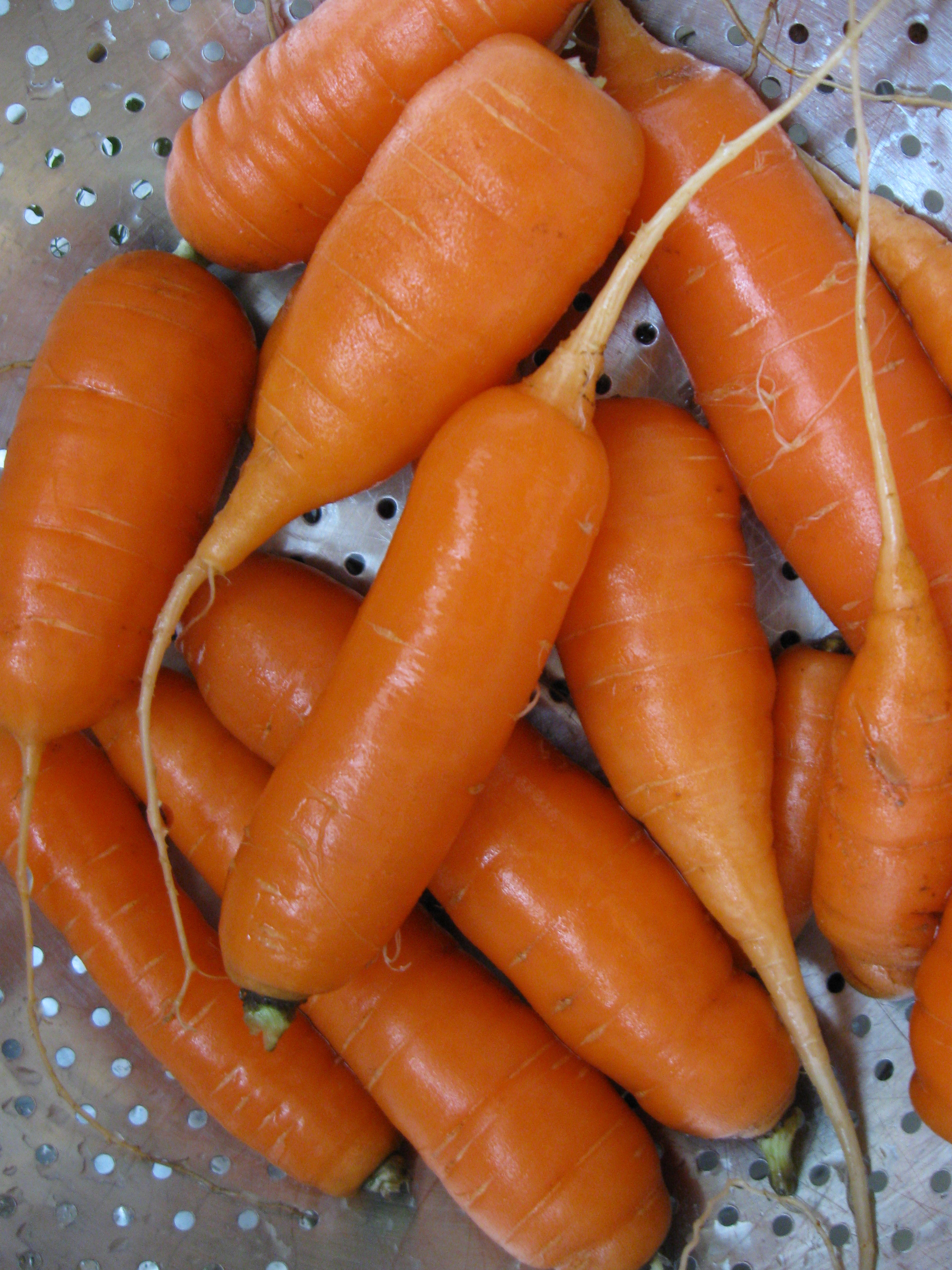
Bright orange rays infused through flesh,


sleep beneath


straw


ice


snow


mesh.


Mercury drops while sugars rise,

January harvest

brings

sweet

surprise.


Metal tines release root from soil,

Emanates

like the

golden

royal.


Cool crisp bite no need to say,

taste of

sunshine,

long

hot

days.